A total of EUR 172 million will be dedicated to advancing competitive circular bio-based industries in Europe across 13 topics. All stakeholders of the circular bio-based sector can apply: deadline 18 September!
This is the final event of the DEFINITE-CCRI project which links up high-impact circularity projects and funding institutions to boost the transition to a circular economy.
It will present key results of the DEFINITE-CCRI project, discuss relevant policy recommendations on circular economy project development assistance and engage with local start-ups and projects as well as with local government officials and investors.
This WCEF2025 accelerator session explored innovative mechanisms for enhancing and protecting natural ecosystems, in accordance with COP16 commitments and global sustainability goals.
This accelerator session will explore innovative leadership and collaborative models driving circular economy transitions, featuring insights from both European and Brazilian pioneers.
With real-world case studies from the European Circular Economy Stakeholder Platform and Brazilian initiatives, the discussion will highlight strategies for scaling circular solutions through inclusive and dynamic leadership.
Join the Global Green Action Day initiative tackling plastic pollution through collaboration, innovation and action.
Held in support of UN World Environment Day on 5 June, this initiative has a twist: because this is a complex challenge, you can only participate if you have completed the online training, which includes lessons, expert panels, guest talks and webinars.
AIMPLAS has developed a device which demonstrates how the Digital Product Passport for plastic products will work. This tool provides essential information about the traceability, materials, recycling and carbon footprint of products.
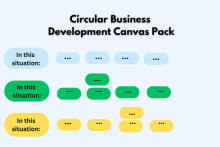
The Circular Business Development Canvas Pack is a set of tools designed to help businesses transition to circular economy models. It integrates key sustainability principles into business development, offering structured frameworks to map out circular strategies, value chains and impact.
The Arctic Circular Economy Summit (ACES) aims to be the most memorable circular transition event in the Arctic. Come and meet experts interested in practical solutions enabling the circular economy in remote areas!
The 1st International Congress on Algae Biotechnology will bring together a dynamic mix of researchers, industry leaders, entrepreneurs and policy makers to shape the future of algae innovation.
Organised by PROALGA and GreenCoLab, this event will explore groundbreaking advances and practical applications of algae in sustainability, health and industry. Come and find out about the latest research, discover disruptive technologies and network with pioneers shaping the algae ecosystem!
This CEPS In-Depth Analysis examines the role, state of play and future prospects of standardisation of critical raw materials (CRM) from an EU perspective.
It begins with an overview of the key benefits and actors in both the EU and global technical standardisation system.
It then maps key recent developments and initiatives in CRM standardisation, in the EU and globally. Drawing on consultations with experts, it identifies three fundamental risks and challenges: the limited participation of EU stakeholders and experts, specific content gaps in recycling and traceability, and a highly fragmented ESG standardisation landscape.
Lastly, it provides policy recommendations to help address these challenges and enhance the EU’s role in CRM standardisation.