new obligations with the creation of new producer responsibility sectors to include new product families in the circular economy (toys, sports and do-it-yourself equipment, building materials, cigarette butts, sanitary textiles);
new prohibitions on single-use plastics and to fight waste of food and non-food unsold products;
new tools to better control and sanction offences against the environment (greater power for mayors to combat littering and illegal dumping), to support companies in their eco-design initiatives (bonus/malus-type incentives) and to assist citizens in new consumption practices (repairability index, information on environment and health impacts of products, harmonisation of info on sorting, etc.).
Europe relies heavily on material resources for almost all of society’s activities. Its extraction and production of material resources have significant impacts on the environment and human health, as well as the economy.
It is essential to reuse resources in European economies, keeping their value high, delivering value for longer periods and reducing the need to use virgin materials. While progress is being made in Europe, by implementing an ambitious waste policy and the Circular Economy Framework, significant amounts of valuable resources are still lost through inefficient waste management practices.
This briefing describes material losses in Europe for some key waste streams, namely waste electrical and electronic equipment, end-of-life batteries, plastic and textile waste.
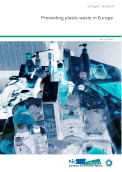
This report from the European Environment Agency reviews waste prevention policies in Europe with a focus on how these policies approach the issue of plastics and plastic waste.
Waste prevention is at the centre of EU waste legislation as it delivers the most effective results in dealing with environmental issues around waste, placing it at the top of EU and national waste strategies and legislation.
Waste prevention can be implemented in any waste stream, but it needs to be customised to reflect each stream's particularities. This report focuses on plastic waste, as there is potential for substantial mitigation of the environmental issues raised by increased plastic consumption through the use of waste prevention instruments and mechanisms.
Companies wishing to increase the amount of recycled materials in their processes and improve the quality in process and product by using digital tools can now participate in the pilots of the research project Di-Plast.
The Ellen MacArthur Foundation and the UN Environment Programme have published the first annual New Plastics Economy Global Commitment progress report. Presented at the Our Ocean Conference in Oslo, the report provides an unprecedented level of transparency on how almost 200 businesses and governments are reshaping the plastics system.
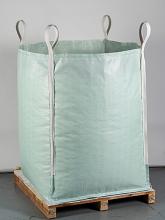
To create a circular economy for Flexible Intermediate Bulk Containers, Starlinger, a plastic packaging machinery and process technology engineering company from Austria, has simulated a closed loop for polypropylene - the main component of big bags- in cooperation with renowned big bag manufacturers Louis Blockx and LC Packaging.
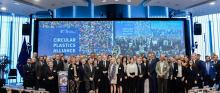
On 20 September 2019, more than 100 public and private partners covering the whole plastics value chain signed the declaration of the Circular Plastics Alliance, which promotes voluntary actions for a well-functioning EU market in recycled plastics.
Over the last few years the concept of chemical recycling has been promoted by industry as a potential solution to help curb plastic pollution and waste management as a whole. This Zero Waste Europe report looks into the knowledge available as well as the state of implementation of such technologies in the European context.
Mechanical recycling is a mature industrial process, well established and expanding in Europe. Plastics cannot however be endlessly recycled mechanically without reducing their properties and quality. Besides, not all plastic types can be mechanically recycled. These limits set challenges for plastics recycling and show the need for significant improvements in the end-of-life management of plastics.
WRAP is a global environmental action NGO transforming our broken product and food systems to create circular living for the benefit of climate, nature and people. It aims to embed circular living in every boardroom and every home.
For over twenty years, WRAP has delivered programmes to benefit the environment, from reducing CO2 emissions and waste to restoring nature and enhancing people’s lives. It began in the UK in 2000 but is now global in scale.
Its goal is to drive the transition to a circular economy by keeping products and materials in use for longer, supporting innovation, adopting new business models and increasing the amount of material that is reused or recycled, as well as minimising waste and reducing the reliance on virgin materials.
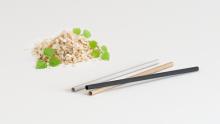
Sulapac has developed a fully biodegradable and microplastic-free material which can replace plastic. The bio-based material is both recyclable and mass-producible and is available as granules or final products.