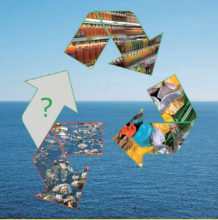
The GLOPACK (Granting society with LOw environmental impact innovative PACKaging) project, funded by the European Union’s Horizon 2020 research programme, investigates food packaging with no environmental footprint and the ability to extend the shelf-life of food products.
The GLOPACK position paper aims at clarifying many debatable points related to bioplastics and biodegradability, especially terminology, and focuses on the benefits of biodegradable (in natural conditions) packaging material that can help the food sector enter the virtuous loop of the circular economy.
The paper also proposes some recommendations (basic, strategic and tactical interventions) to help all stakeholders in the food packaging sector to align with the common goal of ending plastic pollution.
Two European companies, polyamide supplier Domo and polymer manufacturer Covestro, are collaborating with Dutch technology startup Circularise to create a system for tracking plastics.
PackAlliance aims to modernise Higher Education curricula to better serve the plastic packaging sector's labour market needs. It has therefor prepared a questionnaire to gather information on the skills needed in the circular economy applied to this sector. Which skills are vital in the plastic packaging transition to circular economy?
ACI’s Future of Polyolefins Summit, on 20 and 21 January 2021 in Antwerp, will provide the perfect opportunity to meet with leading executives and experts from across the entire value chain.
The events sector is particularly affected by sustainability and resource preservation issues. Aware of the need to reconcile events organisation and the circular economy, stakeholders need to do more to capitalise on existing measures.
The European Green Deal sets out ambitious goals for plastic packaging products in the EU, which include ensuring that all products on the market are reusable or recyclable by 2030. The European project CIRC-PACK shared key lessons at its final online event in March.
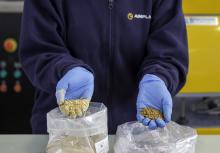
According to the 7th edition of the International Seminar on Biopolymers and Sustainable Composites organized by AIMPLAS on 4 and 5 March, bioplastic production is expected to increase by 15% by 2024 and is carving out a niche in the construction and automotive sectors.
Packaging plastics can offer an almost infinite range of options for manufacturers, both in terms of function and design. Their durability and resistance to degradation means that if they ‘leak’ into the environment, they stay there. Leakage has been increasing rapidly and its detrimental impact, especially on the marine environment, has attracted wide public and political concern.
EASAC established in 2018 an Expert Group to look at scientific aspects of plastics packaging and the circular economy. This report is the result of an 18-month investigation and reviews the negative consequences of the current linear economy for plastic packaging, the scope for improvement towards a more circular pattern and options for increasing recycling rates and reducing leakage into the environment.