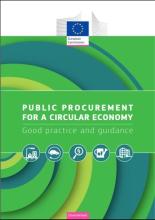
In order to support public purchasers to leverage support for a transition to a circular economy, in October 2017 the European Commission published 'Public Procurement for a Circular Economy'. This brochure contains a range of good practice case studies as well as guidance on integrating circular economy principles into procurement.
Together with a number of partner organisations, Circular Flanders and the Government of the Region of Flanders launched the Green Deal for Circular Procurement (GDCP) on 8 June 2017.
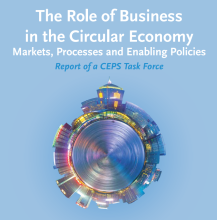
The circular economy is attracting significant interest worldwide, as evidenced by the numerous government strategies, business commitments and partnerships devoted to its development. At the EU level, the Action Plan for the Circular Economy and several other policy documents have demonstrated a strong commitment to move towards a low-carbon and circular economy. While the calls for a new economic model grow louder, it is clear that the transformation of markets and industries on a large scale will not be an easy achievement. It will require well-designed and ambitious policies to foster the transition as well as new business models. Against this background, CEPS brought together executives from major multinational companies as well as representatives of business associations and others.
Transforming the linear economy, which has remained the dominant model since the onset of the Industrial Revolution, into a circular one is by no means an easy task. Such a radical change entails a major transformation of our current production and consumption patterns, which in turn will have a significant impact on the economy, the environment and society. Understanding these impacts is crucial for researchers as well as for policy-makers engaged in designing future policies in the field. This requires developing an in-depth knowledge of the concept of the circular economy, its processes and their expected effects on sectors and value chains.
This paper reviews the growing literature on the circular economy with the aim of improving our understanding of the concept.
The Catalan Government considers that public procurement should be used as an instrument to support strategic policies in the transition towards the circular economy.
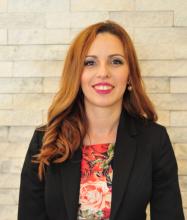
Simina Lakatos has been founding president of the Ernest Lupan Institute for Circular Economy and Environment (IRCEM) since 2012. She has economic and technical knowledge, abilities and experience: she holds a B.A. in Economics and a B.A. Honours in Materials and Environment Engineering. She obtained a Doctorate in Engineering and Management in 2011 after defending her thesis on Corporate Social Responsibility.
Simina has been part of the Department of Management and Engineering Economics of UTC since 2011, where she teaches and researches the following areas: sustainable development with a focus on the circular economy, strategic management with a focus on the social economy, enterprise assessment and marketing and international management, all of which helps her to develop IRCEM. Her focus is on accelerating the transition towards circularity from the bottom up with concerted actions, developing practical and scalable solutions, organising local/regional/EU campaigns, and communicating and involving others in the dissemination of information on the circular economy and messages on sustainable development. Simina is Romanian and speaks fluent English and Italian.