The CircularPSP consortium will be hosting the first meeting of the Circular Economy Taxonomy working group on 21 September 2023 at 10:00 - 12:00 CEST. This online working group brings together suppliers, municipal users and circular economy experts from all over Europe to shape a core terminology and collect initial data sources on the circular economy.
Biodiversity and Climate change are interconnected issues, with ecosystems and biodiversity playing a crucial role in regulating our climate. Circular procurement can contribute to mitigating climate change and preserving biodiversity by minimizing greenhouse gas emissions and protecting natural habitats.
Join us on 20 October 2023 at 10:00 - 12:30 CET for an inclusive dialogue and collaboration with stakeholders to bring together a diverse range of participants to work towards our circular economy goals. Our panellists will delve into the synergies between Circular Procurement and Biodiversity/Climate, two crucial topics for sustainable development.
ICLEI Europe and the City of Lisbon (Portugal) are proud to announce that the 11th Procura+ Conference will be held in the Portuguese capital on 13 and 14 March 2024.
The conference will showcase how cities and public authorities can use public procurement to implement step changes that make a big impact.
The Procurement Transformation Workshop can be set up by organisations who want to rethink their procurement processes and integrate circularity in their procurement department.
The Circular Procurement Toolboxis built upon existing tools and methodologies designed to assist procurers in their efforts. It comprises a collection of original tools and methods that have been compiled throughout the project's duration, and continues to be refined based on practical experiences gained through their implementation.
Academics are studying the challenge of including the informal recycling sector (IRS) in the circular economy.
This review explores the direct and indirect contributions of the IRS to various circular economy fields, drawing on relevant literature.
The modi operandi of different recycling value chains are captured in a typology.
Information on reported forms of collaboration, tensions and challenges in urban waste management is summarised in a conceptual framework to facilitate the transition to circular and inclusive wise-waste systems.
Important aspects related to circular business models and approaches to the IRS are discussed and avenues for further research proposed.
Do you struggle to find the needed resources to set up and commercialize innovative circular economy projects? This workshop on 13 June provides an overview of different funding sources available for circular innovations and of the criteria to be fulfilled in order to tap into them.
The speakers:
Thomas van Nieuwenhuizen, EGEN
Annika Kossack, EISMEA
Céline Rottier, European Investment Bank
Javier Rodrigo Aznàrez, Regional Government of Navarra
Kosovo, a potential EU candidate country, has embarked on an ambitious journey – the transition towards a circular economy. The aim of this journey is:
to preserve the country’s nature and rich biodiversity
to valorise its resources and talent,
to contribute to a more resilient and regenerative economy and a society where everyone has the opportunity to live a good life.
This roadmap by Kosovo's Ministry of Environment, Spatial Planning and Infrastructure identifies six priority areas: a) food and b) forestry systems, c) creative and d) retail sectors, e) built environment and the f) manufacturing sector.
Given the strong interdependency of these sectors, the Roadmap also introduces horizontal areas that enable and support priority areas and further promote circular transition.
The Ellen MacArthur Foundation is a UK charity which aims to speed up the transition to the circular economy. Since it was set up, the charity has emerged as a global thought leader, putting the circular economy on the agenda of decision makers across business, government and academia.
The Ellen MacArthur Foundation is a UK charity which aims to speed up the transition to the circular economy. Since it was set up, the charity has emerged as a global thought leader, putting the circular economy on the agenda of decision makers across business, government and academia.
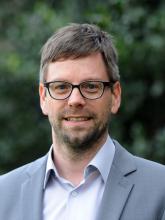
Carsten Wachholz joined the Foundation in 2020 after spending two years working for the European Investment Bank on Corporate Responsibility and another four years working for the European Environmental Bureau on the first EU Circular Economy Action Plan. Carsten leads the Foundation's newly established Brussels-based team supporting the development of circular economy policies at EU and international level (e.g. G20, OECD), in close collaboration with the Foundation's systemic initiatives on plastics, fashion and food.