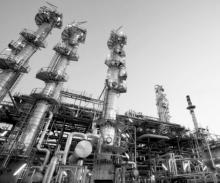
The overall objective of the project is the "smart" exploitation of Petroleum Refinery Sludges (PRS) produced by the Refinery of Motor Oil Hellas in Corinth (Greece).
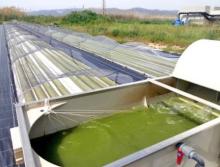
Within the European project INCOVER, an experimental plant uses low-energy photobioreactors to cultivate micro-algae and transform wastewater into bioproducts.
This article describes this new experimental plant and the start-up stage, starting from the new design of three semi-closed horizontal photobioreactors with low energy requirements, for microalgae cultivation (30 m3 total), using agricultural runoff and urban wastewater as feedstock.
The inflow nutrients concentration is adjusted to select cyanobacteria, microalgae able to accumulate polyhydroxybutyrates, which can be used for bioplastics production. Part of the harvested biomass is used as substrate for anaerobic co-digestion (AcoD) with secondary sludge to obtain biogas.
'The circular economy and the bioeconomy — Partners in sustainability' is the third EEA report on the circular economy. It aims to support the framing, implementation and evaluation of European circular economy policy from an environmental perspective. It shows that the two policy agendas have similar objectives and areas of intervention, including food waste, biomass and bio-based products, and that they would benefit from stronger links, particularly in product and infrastructure design, and collaboration throughout the value chain.
The increasing demand for food, feed, biomaterials and bioenergy resources could worsen the over-exploitation of natural resources. By extending the lifetime of products and recycling materials, a circular bio-economy approach can help retain material value.
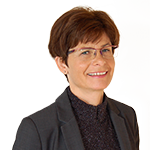
Laura Cutaia, researcher at ENEA, is an Environmental Engineer (1996) with a PhD in raw materials engineering (2002). Her main research topics are:
Industrial ecology and symbiosis,
Technology for raw and secondary materials treatment,
Resources management,
Life Cycle Assessment,
Environmental certification,
End of life management.
Laura Cutaia is responsible for making the most of resources at ENEA , where she is working on the circular economy and resource efficiency, industrial ecology and symbiosis, LCA, environmental certification schemes, the REACH regulation and sustainable industrial areas (more information).
Laura Cutaia is also president of SUN - Symbiosis Users Network (Italian network for industrial symbiosis) and president of UNI CT 057 on the circular economy that works with ISO TC 323 on the circular economy. UNI is the Italian body responsible for standardisation.
As an adviser for environmental and climate policy, Leon de Graaf particularly follows policies related to the circular economy, trade and climate, low-emission mobility, implementation of the Paris climate agreement (COP21) and the European emission trading system (EU ETS). He is also deputy manager of BusinessEurope's corporate Advisory and Support Group (ASGroup). Prior to joining BusinessEurope, Leon worked at the research consultancy Ecorys, focusing on renewable energy and international development issues, at DG COMP on energy and environmental subsidies in Europe, and at the Dutch Environmental Assessment Agency (PBL) on indirect ETS costs for energy-intensive industries. Leon has a MSc in environmental economics and climate change from the London School of Economics, and a BSc in business economics from the University of Groningen.