This Slovakian social enterprise collects old advertising banners and turns them into useful items - and they teach vulnerable people the skills needed to do so!
Holly Holton and Ren DeCherney will be getting into why the vibes are (still) so off in sustainability, how people are still fighting the good fight, and how you can still get real stuff done in a world that feels bananas.
The Wardrobe Stories Barometer aims to collect stories about circular fashion and skills. Did you buy an upcycled dress or have a pair of trousers repaired? Do you know about a circular hub teaching sewing skills or a workshop looking for someone who knows what to do with a needle?
Hotels do tend to get through textiles – sheets and towels wear out when subjected to heavy use.
CLOTH’EL collects textiles which no longer meet requirements and turns them into items which can be used by the initial owner to further their brand, or by other organisations or people which have a need for them.
This conference will look at how social and circular practices operate in Croatia and across Europe, and what policy and funding frameworks they need.
What can “old” and “new” Member States learn from each other in policy and practice? How do EU‑level policies translate into national laws, and what important gaps remain?
This year, this long-standing event will shift the focus to the circular economy. Six tracks of plenary sessions and workshops will stretch over two days, exploring topics such as reuse, responsible production and consumption, and anticipating future events.
This conference will explore advanced, digitally enabled solutions for industrial remanufacturing across various sectors, including automotive, home appliances and optoelectronics. It will also address broader industrial challenges, opportunities and emerging EU legislative trends in the field of the circular economy.
For many years, buying new was financially and logistically easier than repair. This resulted in large amounts of waste and used up resources at an impressive and unnecessary rate.
French industry discards a huge percentage of its production output. Maximum uses those valuable rejects to make standardised furniture, such as chairs, tables and benches.
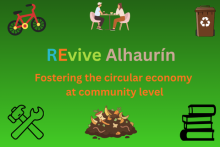
REvive Alhaurín puts the circular economy into action at community level.
It encourages local people to opt for repairing and sharing items rather than buying new ones, and provides useful advice on how to be a more responsible consumer.