France's Law Against Food Waste has become an international model for sustainable food policy. The law is often described as combining economic efficiency with environmental protection and social equity. However, stakeholder narratives cast doubt on whether this French CE law really contributes to social justice in the long run. This discourse analysis shows that:
the ban on food waste institutionalised a narrative about food waste that prioritises profit over social equity
the traditionally dominant solidarity narrative about food waste has been pushed back by the emerging CE discourse
As a consequence of this shift, activities enacted in the name of the CE may counteract social equity goals (for instance by establishing competition with charities).
The circular economy is a model of production and consumption that is underpinned by a transition to renewable energy and materials. It is a resilient system - good for business, people and the environment. The book titled The Circular Economy and Green Jobs in the EU and Beyond examines what the circular economy means, why the transition from a linear economy to a circular one is important, and how we can achieve it.
The book offers clarification on the meaning and the implications of the circular economy across different contexts – economic, social, cultural, legal and international. Particular emphasis is placed on the implications for jobs and different business models as well as on questions of equity.
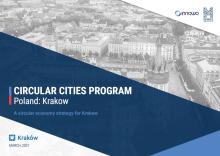
In 2017, Poland was the third most carbon–intensive economy in Europe. The five main contributing sectors are power, industry, the built environment (mainly heating), agrifood and transport.
Poland is home to 33 out of 50 cities with the highest air quality concerns in the EU, according to the WHO. The two major sources of pollutants are motor vehicles and the burning of coal in domestic solid fuel furnaces.
Recent action by Poland's cities, governments, and local communities indicate that change is sought after. The acceptance of the circular economy roadmap at the national level in 2018 and city development strategies emphasize readiness for a transition towards a circular economy. This transition could help tackle some of the country's greatest social and environmental challenges.
The Italian Cartiera is an ethical fashion workshop founded in Lama di Reno, Marzabotto, in 2017 which makes leather and fabric items.
Believing strongly that work is an extraordinary tool for social inclusion, Cartiera offers paths for employment and integration of disadvantaged people, mainly refugees and asylum seekers.