Wolkat is an family owned group of innovative, international textile recycling companies. It is offering a circular solution for textiles. Collected textile is transformed in-house to new products through sorting, recycling, spinning and weaving. All collected textile is transformed into a final product with hardly any water or any dye, leaving only 4-5 % waste from all textiles.
The CSCP, Sitra and DBU have set up the Consumer Insight Action Panel, a new European multi-stakeholder initiative designed to support the transition to the circular economy by generating, applying and testing consumer behavioural insights in circular strategies for textiles, plastics and electronics. How might we innovate to enable people to reuse, repair, share or recycle? Find out with us!
The Policy Hub (founded in 2019) aims to promote circularity in the apparel and footwear industry and propose policies that accelerate sustainable practices. It represents over 700 stakeholders and has partner organisations:
It looks at each stage, focusing on ways to reduce the environmental impact and considering end of life. The Policy Hub seeks to encourage an ambitious policy framework to speed up the transformation of the apparel and footwear industry towards circularity. It focuses on:
The EU faces multiple challenges (climate crisis, environmental disasters, a lack of competitiveness, falling behind in the digital race, etc.) that it will need to address if it is to ensure long-term sustainable prosperity for European citizens. At the same time, there are two ongoing transitions – the creation of a circular economy and the digital transformation – that could provide the means to address these challenges, if they are managed well.
As the EU and national policymakers are making significant efforts to promote a circular economy on the one hand and a digital economy on the other, Annika Hedberg and Stefan Šipka, together with Johan Bjerkem, argue that it is time to align the agendas as a means to achieve greater sustainability and competitiveness.
These factsheets outline circular economy opportunities to design out urban waste and pollution, ensure products and materials maintain their value, and regenerate the natural systems in our cities.
Easy-to-reference, the factsheets are a collation of research and case examples that answer some of the most prevalent questions around what circular economy can bring to cities:
Why is change in cities needed?
What circular economy opportunities address key urban system issues?
What can urban policymakers do to harness circular economy opportunities?
What are the potential economic, social, and environmental benefits of these opportunities?
The Consumer Insight Action Panel is a two-year initiative jointly set up by the CSCP and Sitra as part of their contribution to the ECESP. Its objective is to translate consumer needs and behavioural knowledge into impact-oriented activities, initiatives and recommendations to support policy makers, business and civil society in enabling consumer-relevant circular economy strategies.
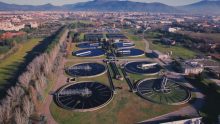
GIDA is a wastewater treatment plant that helps meet the needs of the local textile industry by supplying water of sufficiently high quality, while keeping water consumption to a minimum.