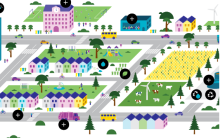
The HOOP project has provided Project Development Assistance to eight lighthouse cities and regions, supporting them with the development of large-scale urban circular bioeconomy initiatives focusing on making bio-based products from urban biowaste and wastewater. The partners have developed a suite of open-source tools to help cities and regions launch urban circular bioeconomy projects.
UNEP’s One Planet Network, the UNDP and the UN Climate Change secretariat have developed a practical toolbox that will help countries identify, prioritise, implement and track circular economy measures with a view to implementing their Nationally Determined Contributions (NDCs) and making them more ambitious.
This publication describes a wide range of Spanish businesses which are run on circular principles. The goal is to encourage the shift to a circular economy.
This Circular Economy Policy Research Center publication aims to define clear model clauses for PaaS contracts, which reflect the expectations and intentions of the parties involved. The clauses cover all aspects of a contractual relationship, such as definitions, clauses substantiating the parties’ obligations and its termination.
This toolkit distills the lessons learned during the Med4Waste project and five other projects under the ENI CBC Med programme. It explores the state of play in the Mediterranean waste management sector, looking at challenges and bottlenecks. It uses this information to produce recommendations and policy guidelines for national, regional and local authorities.
The ECO-FUTURE project was a 24-month transnational cooperation project on Teaching Circular ECOnomy to the FUTURE Generations.
It produced a series of educational tools in the field of the circular economy. The materials produced provide an upskilling pathway programme with which teachers can help 6-12 year old pupils explore the topic and values of the circular economy and sustainability.
The GO-GRASS evaluation tool provides valuable insights and recommendations to help users make informed decisions about a business idea related to the processing of grass. The tool offers insights about critical factors and best practices, based on the four GO-GRASS demonstration sites and possible value chains for grassland valorisation.
TwinRevolution is an interactive tool and training course intended to upskill and reskill VET learners by providing them with the necessary green and digital competences. It focuses on the European textiles and furniture sectors, simply because they were not set up as digital nor have they adopted a green approach from the outset.
This guide is intended primarily for building owners. It presents several pathways for integrating the principles of reusing building materials in construction and renovation projects.
Businesses need financing, and banks need to know whether a given company is a good risk. The Risk project group (part of De Nederlandsche Bank's Circular Economy Working Group and consisting of experts from Rabobank, ABN AMRO, ING, Triodos and Invest-NL) set out to create a scorecard which would enable financial institutions to establish whether a specifically circular business is a good bet.