The brochure Circular Cities shares knowledge and experience of circular solutions from the Netherlands to inform and inspire people and to stimulate international cooperation.
Ethical smartphones, multifunctional strollers, remanufactured milking robots and bicycles-as-a-service: the Dutch manufacturing industry offers plenty of inspiring and groundbreaking innovations for a circular economy. International cooperation is nonetheless crucial to deliver and accelerate the circular transition as the value chains of the manufacturing industry cover the whole world.
With this publication, Holland Circular Hotspot and the Dutch Circular Manufacturing Implementation Programme (UPCM) aim to bring insights and case studies from the Netherlands to an international level, in order to inspire everyone around the world to act and kickstart circular development.
Every year, huge numbers of photovoltaic (PV) modules are being installed. This solar energy expansion greatly furthers the ecological transformation of the energy system. But to solve the climate crisis every aspect has to be taken into consideration. This is why this white paper wants to shine light on challenges currently occuring or to be expected in connection with used photovoltaic modules and their disposal in Germany.
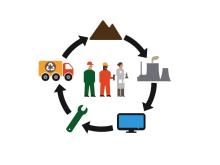
To better implement the goals of a circular economy, this paper will retrace the steps in the lifecycle of a photovoltaic module and analyse problems and possible solutions along these stages. After a brief description of the occuring challenges, opportunities and solutions deemed to be effective and sensible in these matters are presented.
France adopted its comprehensive Anti-waste Law in 2020. The law aims to eliminate waste and pollution from the design stage and transform the system of production, distribution and consumption from a linear to a circular economic model. It encourages businesses across various sectors, municipalities and citizens to eliminate waste and adopt more circular practices.
Policymakers, municipalities, NGOs and businesses worked together with the public administration to identify a richer range of needs, solutions and policy measures. As a result, the law is ambitious and contributes to a system-wide transition towards a circular economy.
Welcome to the circular economy event of the year, World Circular Economy Forum 2021, on 13-15 September 2021!
Hosted for the first time in North America, WCEF 2021 will focus on the system level changes, or “game changers,” needed to accelerate the transition to a circular economy.
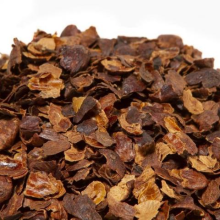
The Italian company CIA has found that the most appropriate way to reuse coffee husks is as a fertiliser and soil conditioner by composting them in organic farms.
Ristorazione Sostenibile 360° is the first voluntary certification programme for regional catering, suitable for any type of restaurant in the Emilia-Romagna Region (IT).