The Roadshow INVEST YOJOA will bring together key stakeholders keen to contribute to the recovery of the Yojoa Lake Basin and scale up investment. EU and Honduran companies are invited to attract investment and create technology transfer opportunities!
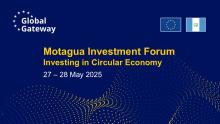
The Motagua Circular Forum aims to be a catalyst for change in the Motagua River Basin, where circular economy, European investment and collaborative governance build bridges towards a sustainable future.
The forum will bring together local and Team Europe partners, including EU representatives, Member State organisations, financing institutions and the European private sector. It will create a platform for dialogue with the objective of generating partnerships and investment in circular economy infrastructure and value chains in the river basin.
Companies from the water and waste management sectors are invited to be part of this initiative and express their interest in participating in the forum to pitch their solutions in Guatemala.
The transition to a circular economy requires more than just recycling and material recovery: it will take a fundamental shift in how businesses operate. Product-as-a-Service is at the forefront of this transformation, offering a model that prioritises access over ownership, optimises resource efficiency and reduces waste.
This WCEF accelerator session will look at how businesses successfully implement this model and the challenges and opportunities along the way.
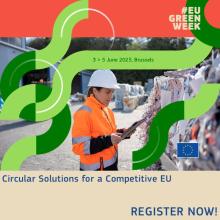
This year, EU Green Week will focus on circular solutions for a competitive EU. It will explore how the EU economy can speed up the transition from linear to circular models of production and consumption.
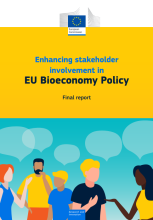
This report explores ways to boost stakeholder engagement in EU bioeconomy policy, a crucial step in shaping a sustainable and circular economy.
After identifying key gaps and opportunities, the study proposes seven recommendations to enhance stakeholder involvement, such as setting up an EU Bioeconomy Stakeholder Platform and a Bioeconomy Youth Forum. This will enable the EU to ensure that its bioeconomy policy is more inclusive, effective and responsive to the needs of all stakeholders.
The report sets out four case studies of successful stakeholder engagement initiatives. This includes the ECESP, which is described as having been highly successful in achieving its objectives and having inspired the establishment of similar platforms in other regions.
This World Circular Economy Forum Side Event will explore the newly established Western Balkans Circular Economy Hub and its strategic focus and role in the region, vision and planned activities.
Hear from Elin Bergman, the top Swedish voice on circular economy topics and Nordic Hotspot Hub founder, as well as representatives of the Chambers of Commerce and their role in helping businesses in the circular transition.
The event will also showcase successful examples of companies from the region that operate with a circular business model or are implementing circular business practices.
Circular Cities Day is part of the OECD Urban Days which brings together global leaders, experts and changemakers to discuss how to shape and finance inclusive, circular and sustainable cities.
Circular Cities Day will include sessions on Closing the loop: circular economy in European cities and regions and Circular cities and regions in action: insights from 10 policy scans (both organised jointly by the OECD and the Circular Cities and Regions Initiative).
A total of EUR 172 million will be dedicated to advancing competitive circular bio-based industries in Europe across 13 topics. All stakeholders of the circular bio-based sector can apply: deadline 18 September!
This is the final event of the DEFINITE-CCRI project which links up high-impact circularity projects and funding institutions to boost the transition to a circular economy.
It will present key results of the DEFINITE-CCRI project, discuss relevant policy recommendations on circular economy project development assistance and engage with local start-ups and projects as well as with local government officials and investors.