CircuLaw is an open-source knowledge platform that helps policymakers, project leaders and purchasers effectively utilise existing laws and regulations to accelerate the transition to a circular economy.
The Arctic Circular Economy Summit (ACES) aims to be the most memorable circular transition event in the Arctic. Come and meet experts interested in practical solutions enabling the circular economy in remote areas!
This conference will present papers by young scientists, PhD students, students and scientific groups on new technological and IT solutions and innovative products and materials supporting sustainable (including circular) and competitive development.
Representatives of science, industry and start-ups will also promote implemented projects, innovative product solutions and innovations in the business process.
EUIndTech2025 will bring together stakeholders from research organisations, industry, industry associations, NGOs and policy makers to discuss state-of-the-art technologies, technological challenges and future trends in the field of industrial technologies.
It will focus on presenting solutions and best practices while developing written recommendations for new EU policies in four key areas: technology, materials, science and business, community in action.
The European Training Foundation has launched the fifth Green Skills Award, an annual competition designed to provide ideas and inspiration for policy makers and practitioners on how things can be done when it comes to green skills deployment and promoting sustainability.
Shifting mindsets is just as crucial as setting criteria when it comes to circular procurement. How can we move beyond compliance-driven approaches and embed circular thinking into procurement strategies? This #EUCircularTalks event hosted by the ECESP Leadership Group on Circular Procurement and EU Competitiveness explored these topics.
Smart Circular Economy is an international workshop focusing on the role of ICT as an enabler for the circular economy. It brings together scientists, researchers and stakeholders from industry and local communities to discuss challenges and research at the intersection of ICT and the circular economy.
The Green Growth project aimed to address the challenges of integrating the circular economy into the European construction sector through comprehensive training and capacity building for trainers.
Co-funded by the European Union's Erasmus+ programme, the project ran from 2020 to 2023. The project developed several key resources to embed circular economy principles into Technical and Vocational Education and Training (TVET).
This report describes what Circle Economy achieved in 2024.
In 2024, they rolled out a new approach to delivering impact which focused on three key objectives to accelerate the global transition to a circular economy: empowering decision-makers (they provided indicators and evidence to ensure accountability in circular economy ambitions), financial support for solutions (they raised sufficient financial capital for circular and just solutions) and building capacity (this involved equipping key actors with the tools needed to implement circular solutions).
The report gives figures to describe their impact. For instance, they have directly supported over 970 businesses and organisations and trained over 7200 people in circular economy principles.
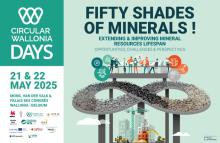
Circular Wallonia Days is a two-day event designed to connect up EU regional ecosystems involved in the value chain of eco-materials for construction. This year, it will focus on achieving strategic autonomy for construction materials.