Climate Action Week for Fashion & Apparel will take place on 18 to 22 March, organised by the Scandinavian Textile Initiative for Climate Action (STICA).
This Accelerator Session of the World Circular Economy Forum will be held in Brussels on 17 April 2024, co-organized by UNECE and the Mission of the Republic of Serbia to the European Union.
The session will look into how partnerships and regional stakeholder platforms drive the circular economy transition, particularly in regions where circular practices are emerging.
In 2022 the Podravje region (Slovenia) became part of the Circular Cities and Regions Initiative (CCRI) and was selected as one of the 12 CCRI pilots being supported for the implementation of Circular Systemic Solutions (CSS) which could provide answers to major challenges beyond resource management and waste/water recovery.
The region is now developing a circular bioeconomy strategy which is the key document describing the available regional resources and linking them to suitable CSSs.
So far, two rounds of consultations with regional stakeholders have been organised and 9 key CCSs have been identified as the key activities within 4 priority areas:
Linked to the BATRAW project that develops circular approaches for electric vehicle batteries, this CEPS report delves into the new EU regulatory framework for batteries and the expanding EU digital product passport landscape. It identifies key opportunities and challenges for battery passports based on data collected from companies at different stages of the battery value chain.
The data suggest that the battery passport can help break down information silos among supply chain actors and support recycling and reuse. It also provides opportunities for increasing transparency about carbon footprint impacts across battery supply chains, while creating a level playing field with horizontal requirements for all supply chain actors.
Enterprise Europe Network Flanders, Flanders, Wallonie Entreprendre and Hub.Brussels are organising an official WCEF2024 side-event: a global online matchmaking session focusing on circular innovation. There'll be an online part (8-14 April) and an in-person part (17 April).
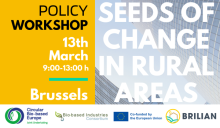
The BRILIAN project workshop "Seeds of Change in Rural Areas" will address several crucial policy-related topics, including developing new materials from agricultural feedstocks.
There will be presentations by representatives of the European Bioeconomy Bureau, the Circular Bio-based Europe Joint Undertaking and the European Commission's Joint Research Centre (EC-JRC), as well as a round table session on unlocking resources from agricultural produce and waste.
The European community PACCT for Sustainability (Product as a service to Accelerate Cooperation and Circular Transformation) will host a new webinar on 19 March 2024 (from 10:30 to 12:00 CET) to explore product-as-a-service governance and operations with experts.
Participants to the workshop will be able to interact with Michelin, Xarvio and Aston Business School, who will be sharing their experience operating product-as-a-service models.
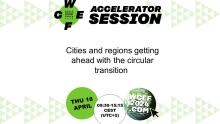
Co-organised by the European Commission’s Circular Cities and Regions Initiative (CCRI) and its strategic partners, the Organisation for Economic Co-operation and Development and the European Investment Bank, this hybrid WCEF accelerator session will focus on how EU cities and regions are moving ahead with the circular transition.
The European Commission's Directorate-General for Communication, Networks, Content and Technology has published a call for proposals regarding the deployment of the Green Deal Data Space. The call is looking for solutions that use data and digital technologies to create value for the circular economy as well as biodiversity, zero pollution or climate change/adaptation.
An information webinar on the call will take place on 6 March at 10:00-12:15 CET.
The European Commission is hosting a webinar on 18 March showing how the EU Level(s) framework for sustainable buildings can help industry professionals navigate changes in the rules governing sustainable finance as regards construction and real estate.