On 1 November, the ECESP's Leadership Group on Biodiversity & Climate, in cooperation with the European Economic and Social Committee (EESC), the International Union for Conservation of Nature (IUCN) and the Ellen MacArthur Foundation (EMF), organised a COP16 side event exploring Towards a circular economy in harmony with nature.
This was the last side event hosted at the EU Pavilion, but it still attracted a high level of interest and participation. The recording of the session is available – have a listen!
The ECOFAP project aims to make shoe soles and heels from a material manufactured from tanned leather waste using 3D printing. This research project will help solve the problem of how to recycle leather scraps from the footwear manufacturing industry.
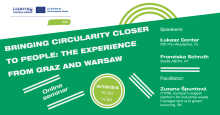
This online seminar explores how to empower residents of European cities to adopt more circular living practices. It will delve into initiatives successfully implemented in Austria and Poland.
The Sustain-a-bite project is set to redefine plant-based eating with nutritious, minimally processed foods that drive health and sustainability, one bite at a time. It will develop minimally processed food alternatives using whole grains and upcycled side-streams from the food industry.
Tasty, healthy and good for the environment: forks out and dig in!
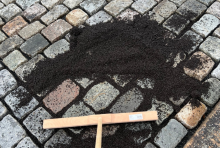
GIND is an innovative company dedicated to developing sustainable and long-lasting solutions for road surfaces and outdoor spaces. Its BIO DILE™ joint filler replaces traditional, resource-intensive and short-lived materials with more environmentally-friendly alternatives made from recycled, sun-dried stone aggregates and bio-based binders derived from cashew nut shells and natural asphalt. At the end of the filler's lifecycle, it can be fully recycled.
The World Circular Economy Forum 2025 (WCEF2025) will take place in South America. It will explore the potential of tropical solutions for sustainable growth, the power of regeneration and bioeconomy strategies, along with how the production sector is driving the transition toward a circular economy. The forum will also address key topics relevant to Latin America and the world.
Accelerator sessions will be held by WCEF collaborators on 15 and 16 May.
Up2Circ (Boosting the uptake of circular business model, product and process innovation) is an international project funded by the Horizon Europe programme which aims to accelerate and scale up the transition of European SMEs towards a circular economy.
Resources without identity become waste, and this issue must be tackled in order to foster the circular economy. This webinar will discuss methods for assigning appropriate information to goods, tracking them and then processing and transfering this data efficiently, using state-of-the-art technologies such as AI, visual tracking systems, the Internet of Things and common communication languages.
With demand for lithium-ion batteries increasing worldwide, developing a solid understanding of the environmental and social impacts associated with how they are used is becoming increasingly important.
This eventaims to discuss where we stand in terms of assessing the environmental and social impacts associated with lithium-ion batteries.
This second webinar in the Circular Economy Knowledge Hubs Webinar Series will showcase regional and global perspectives on implementing circular economy activities, with a focus on how knowledge platforms can drive awareness, build capacity and inspire action among policy makers, producers and consumers.