Each year, the European Tyre Recycling Association holds a conference on tyre recycling; this year's conference will focus on 30 Years of Tyre Recycling: Innovations to build the Future. It will look back over the last three decades, considering the materials used and developments in this industry.
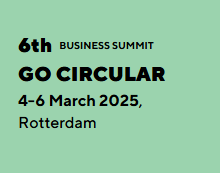
Go Circular 2025 will explore the significant changes taking place in the plastics industry, focusing on sustainable design, advanced recycling technologies, circular economy strategies, and policy and regulation.
EuRIC Textiles is organising an event presenting the EuRIC Textiles Manifesto and featuring a keynote speech on how the EU textile industry can stay competitive in the circular economy. There will be discussions on advancing textile circularity in Europe, bridging the gap between policy making and business realities, and facilitating the trade of second-hand clothing.
The European Commission's Joint Research Centre has published a study on new product priorities in connection with the Ecodesign for Sustainable Products Regulation. The ESPR entered into force this year and aims to make sustainable products the norm.
The study looked at a number of product groups and horizontal requirements to see if they were suitable for action under the ESPR. The criteria used were environmental impacts and improvement potential, market relevance, policy coverage in the EU, cost reflections, and contribution towards EU Open Strategic Autonomy.
It identified 11 final products, seven intermediate products and three horizontal requirements (durability, recyclability, recycled content) as potential priorities for the next steps in preparing the first ESPR Working Plan.
Driven by government support, decarbonisation efforts and technological advancements, electric vehicles – with their lithium-ion batteries – are becoming increasingly common. Electric vehicles produce fewer emissions than combustion engine ones, but fewer is not zero. The emissions they do produce across their lifespan (production, use, recycling) need to be mapped.
Calculating their carbon footprint (the total amount of greenhouse gas emissions that come from the production, use and end-of-life of a product or service) is key and required by the Batteries Regulation (EU) 2023/1542.
This paper looks at the challenges of calculating batteries’ carbon footprint and implementing the relevant obligations for companies introducing batteries into the EU market.
RedGirraffe ESG Horizon is a software as a service solution designed for enterprise resource planning. It supports the circular economy by enabling precise tracking and optimisation of Scope 3 emissions across global supply chains.
Maiano Re-Lab comes up with sustainable industrial applications for textile scraps from mass-produced consumer goods. This initiative establishes synergies between industrial sectors, minimising waste and promoting sustainability within the industry.
The Circular Republic Festival 2025 (#CRF25) will focus on Build Your Competitive Advantage.
It will explore how circular practices can reshape industries and create resilience in the face of resource scarcity and climate challenges. There will be keynote addresses, hands-on workshops and tailored recommendations to help integrate circular principles into business strategies.
The Sustainable Fashion Academy launched the Scandinavian Textile Initiative for Climate Action (STICA) in collaboration with various apparel and textile companies. STICA aims to ensure that the Nordic region and Europe reduce their climate impacts in line with the 1.5°C global warming pathway, while transforming their businesses and the industry.
Signatories to STICA undertake to set targets on scopes 1 to 3 and report back. The focus of this report is emissions reduction, and circular business models are presented as part of the solution. The information provided by the signatory companies as part of their reporting covers circular business models, breaking down how these contribute to scope 3 reduction and their place in the companies' climate action transition plans.
Refashion's Recycle Summit brings together key stakeholders from the textile and footwear sector. It showcases significant achievements in circularity, including groundbreaking technical studies, the development of unique material libraries and measurable environmental impacts. It aims to drive collaboration and innovation, strengthening the adoption of recycled materials and positioning the industry for a sustainable and competitive future.