The 6th Plastics Recycling Technology Conference will be held in Vienna, Austria on 1 and 2 October 2024.
Responding to increasing pressure to recycle plastics and add value to reclaimed materials, the plastics industry is changing fast: this event will cover everything stakeholders need to know to stay abreast.
The conference will explore plastics recycling, advances in processes, feedstock security and all the latest technologies. It will also offer inspirational talks and discussion groups, so participants will learn about methods for improving the quality of reclaimed materials for higher-value applications and developments in recycling systems and additives for better end-of life processing.
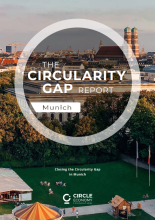
The Circularity Gap Report Munich is the first study measuring the Circularity Gap of a city. It assesses the city’s material consumption, material cycling, consumption-based carbon footprint and other indicators. It uses a consumption-based carbon accounting approach for emissions from goods and services consumed by residents of a locality. On average, each Munich resident consumes 32 tonnes of virgin materials annually.
The study acknowledges the successes of Munich’s circular economy strategy with initiatives like investment in public transport, community gardens and remanufacturing activities, but calls for bolder action to accelerate the circular transition
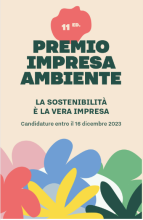
"Premio Impresa Ambiente" is the highest Italian award for companies and public and private bodies that have made an innovative contribution to processes, systems, partnerships, technologies and products furthering sustainable and circular development. Apply by 16 December 2023!
Extended Producer Responsibility (EPR) is one of the key policies requiring EU Member States to organise separate collection of textile waste as of 2025. EPR schemes are an important tool for reducing the environmental impact of textiles, promoting circularity and contributing to more efficient end-of-life management.
Join the hybrid event on EPR for circularity: towards a more sustainable EU textile sector on
29 November from 15:00 to 17:30 CET at the European Parliament or online.
As part of the new EU-funded Circular Economy project, the Green Growth Knowledge Partnership aims to establish a community of practice for organisations involved in circular economy activities. If you would like to participate, please complete this 3-minute survey.
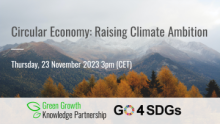
On 23 November (15:00-16:30 CET), the Green Growth Knowledge Partnership (GGKP) and Global Opportunities for Sustainable Development Goals (GO4SDGs) will host a webinar on “Circular economy: raising climate ambition”.
The first in a series accompanying multilateral meetings over the next 12 months, this webinar will explore how applying the circular economy approach can support the goals of COP28.
This report explores the potential of circular business models within the electronics industry, examining three models across four industry segments and throughout six lifecycle stages. The data utilized in the analysis stems from diverse sources: research papers, public databases, internal benchmarking, collaboration with external/internal partners etc.
Projections and estimations are grounded in a comprehensive approach, blending historical data extrapolated with logarithmic adjustments. Baseline data for lifecycle stages is constructed from product Life Cycle Assessments, considering both carbon footprint and cost perspectives. The focus is on capturing the significant impact of approximately 20% of products, which are estimated to constitute around 80% of their respective segments.
The European Commission invites people working in the built environment sector to join an online conference to take place on 13 December exploring Level(s), the EU common language for assessing and measuring the sustainability performance of buildings.
The Asia-Europe Environment Forum supports entrepreneurs committed to driving circularity in their businesses and provides an opportunity to discuss the circular transition of SMEs. This year, the Forum will be organising a conference on Empowering innovation in Asia & Europe - SMEs at the heart of circular transition, to take place on 21 and 22 November in Brussels.
On 6 November 2023, Arthur ten Wolde, ECESP Coordination Group member and Executive Director of Ecopreneur.eu, represented the Platform at a G7-B7 online meeting on Circular Economy and Resource Efficiency Principles. Mr Ten Wolde has been a member of the European Circular Economy Stakeholder Platform since its foundation in 2017.
The meeting was organised as part of the G7 Sapporo Ministers’ Meeting on Climate, Energy and the Environment in Japan. The Group of Seven (G7) is an intergovernmental political forum consisting of Canada, France, Germany, Italy, Japan, the UK, the USA and the EU. TheBusiness7 group (B7) is the G7 platform for dialogue with the international business community, consisting of the industry and employers’ associations from the G7 including BusinessEurope.