“The Road to Green” is a Euronews magazine in collaboration with DG ENV of the Commission. It features monthly 8-minute videos, delivered in a road trip format, covering Europe’s continuing transformation to a circular, net-zero, nature-positive and clean economy.
The 8th World Circular Economy Forum hits Brussels from 15 to 18 April 2024 to turn circular visions into actions. The world’s leading event for circular economy thinkers, doers and leaders will showcase the most impactful circular solutions from Europe and around the world. Online participation is open to everyone.
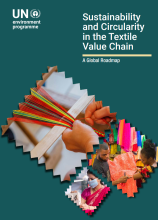
This UNEP report outlines what each stakeholder group can do individually and collectively to reach the shared destination of a circular textile sector.
ASK - The Nordic Way is a Nordic region-based podcast exploring sustainability and circularity. Each episode tackles a different aspect: have a listen!
The Foundation aims to accelerate the transition to the circular economy, drawing on an international team of experts based in Amsterdam who flag up practical and scalable solutions to put the circular economy into action. The ultimate goal is to see global circularity double by 2032.
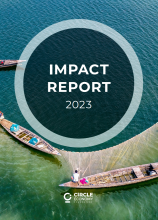
The Impact Report focuses on the Circularity Gap Reporting Initiative, thanks to which Circle Economy Foundation - over the years - has tracked global circularity and highlighted replicable case studies in its Circularity Gap Reports covering countries from Austria to Latin America and the Caribbean. The Initiative continues to bring together global, multi-sector stakeholders from academia, business, government and the
The Climate Chance Europe 2024 Wallonia Summit will take place on 8 and 9 February 2024 in Liège, Belgium, and organisers are calling for contributions from across the European Union!
Promoters of selected climate actions will be able to present them at the Pitch Corner. These actions will also be published on the Cartography for action, which lists good practices and innovative climate initiatives that can be replicated on a larger scale. Circular economy projects as covered as part of the economic transition.
The Dutch circular procurement platform Versnellingsnetwerk Circular Inkopenhas gone global with the English version of its website.
Aiming for a sustainable future, it shares Dutch good practices on circular procurement. Tailored to global stakeholders, the platform offers a step-by-step guide, role-specific advice and product-specific insights, emphasising supplier involvement.
Developed through multistakeholder collaboration and supported by the Ministry of Infrastructure and Water Management, it is a vital resource for a circular economy.
The workshops on Nutrient recycling policy will be held by the European Sustainable Phosphorus Platform in Brussels and online on 12-14 March 2024.
Objectives:
To elaborate ambitious, feasible and consensus proposals for regulatory targets for phosphorus and nitrogen reuse-recycling from municipal wastewater and
To identify policy tools to support market pull for recycled nutrients which could achieve consensus across industry and users.
The Nordic Working Group for Circular Economy is a working group under the auspices of the Nordic Council of Ministers. NCE's mandate includes contributing to activities and exchanges of information that will promote the transition to acircular economy in the Nordic Region.
NCE also wishes to influence the EU and global actors, for example by helping to identify solutions that will reduce consumption of raw materials, waste, emissions and energy by recycling products, including for new purposes.
NCE carries out projects on different topics related to the circular economy.
In 2022, the EU’s circular material use rate reached 11.5%. This means that 11.5% of material resources used in the EU came from recycled waste materials.