WASTELESS is an applied research project, which aims to measure and monitor food losses and waste in the EU. It will be hosting a series of interactive workshops showcasing the innovative tools developed within the project to tackle food loss and waste across the entire value chain.
This session will focus on Surplus stock measurement and management.
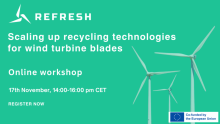
The EU-funded REFRESH project is organising a webinar to present its progress in developing innovative technologies for recycling end-of-service wind turbine blades.
This report addresses the question of whether Flanders, with its limited space, will be able to produce enough biomass in the future to supply the bioeconomy and continue to feed the increasing population.
Four scenarios were used, providing insight into the demand development for biobased raw materials for feed, food, fuel and fibre.
It found that:
An open economy, with international imports/exports of bio-based raw materials, is crucial for a small, densely populated and prosperous region like Flanders.
Long-term collaboration with other regions and countries is a strategic necessity. The energy transition, protein shift and circular transition must be streamlined to run synergistically. This can reduce the pressure on raw bio-materials.
The International Plastics Recycling Seminar, PLASREC, is a benchmark event for professionals in the recycling industry. It will feature over 20 presentations by internationally renowned experts who will address the key challenges, technological advances and regulatory frameworks shaping the plastics recycling sector.
Tiana has created a reliable marketplace for used IT components. The goal is to promote repair, upgrade and reuse of computers, thereby helping reduce the mountain of waste generated by the IT industry.
The European Environment Agency (EEA) has just published a report on 'Europe’s environment and climate: knowledge for resilience, prosperity and sustainability'. It is the most comprehensive analysis of the state of play of and outlook for the continent’s environment, climate and sustainability, building on data from across 38 countries.
Every five years, the European Environment Agency publishes a state of the environment report.
The 2025 report stresses that climate change and environmental degradation pose a direct threat to Europe’s competitiveness, which depends on natural resources. Protecting natural resources, mitigating and adapting to climate change, and reducing pollution will build the resilience of vital societal functions that depend on nature, such as food security, drinking water and flood defences.
We need to rethink the links between our economy and the natural environment, land, water and natural resources. The circular economy is part of this dynamic, and is addressed in chapter 4 on Managing the dynamic between our economy and our natural resources.
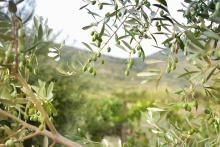
If you've ever been to Spain, for instance, you'll know that the Mediterranean has a lot of olive trees. That makes for a lot of waste. This project aims to use that waste to make animal feed, additives, packaging and biogas.