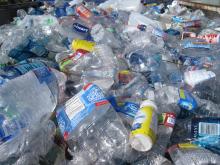
Interseroh provides recycling solutions for plastic packaging. For instance, it has developed a pooling system of reusable plastic boxes for fruit and vegetables sold at Aldi Süd, a German supermarket network.
The Gr3n project aims to contribute to the fight against plastic proliferation in the world by introducing an innovative process for profitable plastic recycling. This process uses microwave technology on a chemical reaction, and results in a ground-breaking, economically efficient chemical recycling process for PET.
Delt Papir is a Croatian manufacturer and supplier of paper products which produces items such as tissue and hygiene products for the consumer and professional care sectors. It contributes to the circular economy through its closed-loop recycling procedures, making toilet paper out of cellulose which would otherwise have cluttered up landfills.
The EU's Bioregio project covered a range of initiatives, all of which are described in its website: from a waste management system in Jelšovce Distillery in Slovakia to biogas units for household applications in Romania and a Spanish project combining the fight against food waste and social inequality.
EntoGreen aims to develop sustainable feed and organic fertilisers by using bio-based technologies to recycle nutrients from agricultural and food waste and reintroducing them into the food chain, thus closing the nutrient cycle.
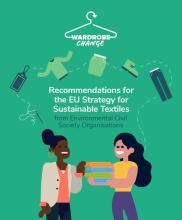
This joint position paper from the Wardrobe Change coalition contains recommendations for the EU Strategy for Sustainable Textiles. It has been signed by 25 civil society organisations. The paper sets out recommendations structured around four overarching principles:
Make sustainable textile products the norm
Drive resource-sufficient textile consumption
Leave the linear business model behind
Hold the EU textile industry responsible for its role in the world.
The cotton gauze grocery bag provides a unique design turning an environmentally-friendly cheesecloth gauze fabric into a sturdy mass produced grocery bag that later can easily be used at home as machine-washable cotton napkins, reusable cleaning cloth and much more.
Based in Barcelona, Rezero is a non-profit organisation that, in collaboration with social and economic actors in Spain, aims to push the model of production and consumption towards zero waste.
Rezero looks for new solutions to extend the life of products and materials by facilitating reuse and eliminate the generation of household waste.
It has a section for information, analysis and debate, where initiatives aiming to achieve a zero-waste society are tested. There is also a section on zero-waste projects. Rezero offers advice and support to companies aiming to reduce their footprint.