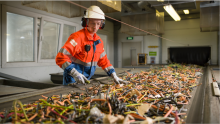
VICAT produces materials for the construction sector (cement, concrete, aggregates) and believes that the act of building should no longer be disconnected from deconstruction. VICAT has therefore rethought its production systems to include circular economy loops focused on the recovery of local construction & demolition waste.
The Belgian company FKL Fertilizers (formerly Fertikal) specialises in the production of organic fertilizers from recycled secondary materials. These recycled resources are collected in a radius of 150 km around the production facility and include chicken manure, struvite, digestates from bio-gas plants, composts, by-products from sugar beet and bio-diesel industry, etc.
RecyCâbles is a joint venture between Suez and Nexans started in 2008 that collects, recovers and processes used cables. The recycling and re-use of cable materials keeps them in the economic loop.
FLOOW2 is working locally and internationally, to identify the need, and the opportunities of asset sharing for businesses by offering a sharing marketplace solution for every business, organization and network.
Complementerre38 obtains waste collection equipment, including end-of-life equipment, that are sold or donated, and gives them new life. In this way, the company provides a technical solution adapted to customer specifications that ensures the re-use of the equipment instead of it going to waste.
PCDT buys used spare parts for home appliances from individuals whose appliances cannot be repaired and will then sell thems - with no margin of profit - to customers who can use them to repair their own appliances.
Based on a circular economic model that combines ecology and economy, b:bot is a machine and digital ecosystem for the collection of PET plastic bottles - with a real social and environmental impact.
The European Investment Bank's Circular Economy Guide aims to promote a common understanding of circular economy, and raise awareness about and promote circular solutions.
The Guide provides information about EIB’s lending and advisory activities in this field, and communicates the vision of how the EIB can further support the transition to a circular economy.