The CirQuality OWL plus project is funded by the EU (ERDF) and the Federal State North-Rhine Westfalia with the aim of fostering the circular economy in the area of Eastern Westfalen-Lippe (OWL).
Several regional partners from different fields (from energy to technologies to food to universities and associations) have teamed up to use the circular economy to get the region off the ground in an innovative, crisis-proof, resilient and sustainable way. Together, they organise events and strive to meet the following goals:
Qualification of future specialists and managers for the circular economy
Circular Supply Chain Management Solutions (SSCM)
Turnaround to circular thinking and economics in the building sector
Waste and circular economy of the future in the OWL region.
Circular Economy Forum Austria is a learning and dialogue platform for businesses, initiating and promoting the exchange and development of knowledge, ideas and initiatives. It identifies potential synergies among companies, politics, science, research and design.
The Forum:
operates and collaborates in a solution-oriented and innovative way;
supports and facilitates comprehensive transformation by linking interdisciplinary know-how and ideas for innovation, decision makers and practitioners;
promotes new business partnerships to increase the visibility of existing and future circular innovation supporting the expansion of Austria's circular ecosystem;
encourages and fosters collaborative projects and initiatives.
The European Investment Bank's Circular Economy Guide aims to promote a common understanding of circular economy, and raise awareness about and promote circular solutions.
The Guide provides information about EIB’s lending and advisory activities in this field, and communicates the vision of how the EIB can further support the transition to a circular economy.
Refurbed is an online marketplace for refurbished electronics. Its products look like new, are 40% cheaper and use 70% less CO2 than the equivalent new product.
restado is a platform promoting a circular approach in the construction sector.
The platform encourages the reuse of reclaimed construction materials. It provides support and knowledge on how to reclaim and reuse the materials, and offers a marketplace to trade them.
The Prosperkolleg project started in the German city of Bottrop on 1 June 2019, aiming to explore how to transfer the idea of the circular economy to industry.
Hochschule Ruhr West, WiN Emscher-Lippe GmbH, the city of Bottrop, the Effizienzagentur NRW and the Prosperkolleg association all joined forces to carry out research and demonstrate innovative developments in circular products and business models.
The project is funded by the Ministry of the Economy, Innovation, Digitalisation and Energy of North Rhine-Westphalia.
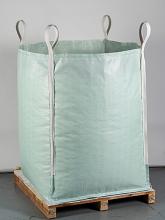
To create a circular economy for Flexible Intermediate Bulk Containers, Starlinger, a plastic packaging machinery and process technology engineering company from Austria, has simulated a closed loop for polypropylene - the main component of big bags- in cooperation with renowned big bag manufacturers Louis Blockx and LC Packaging.