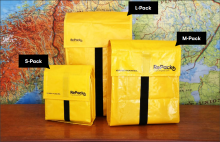
RePack is the easiest way to implement circular economy in eCommerce. Using reusable and returnable RePack packaging service means sustainability in every package.
The reusable RePack bags are and made of durable and recycled materials and come in three adjustable sizes. They replace single-use packaging as the customer chooses RePack as the mean of package for delivery.
With funding from the German Federal Ministry of Education and Research (BMBF), the Circular Economy Initiative Deutschland (CEID) was initiated in 2019.
In three working groups on Circular Business Models, Traction Batteries and Packaging, 130 experts from more than 50 institutions from science, industry, politics and civil society discussed how to enable and establish circular economic systems.
Recommendations were summarised in the Circular Economy Roadmap for Germany. The roadmap was published on 11 May 2021 and officially handed over to the BMBF.
Given the growing demand for electric vehicles, CEID is currently engaged in the Battery Pass project. This focuses on the sustainable production, use and recycling of lithium-ion batteries and the digital battery passport.
This preliminary study stimulates public debate on the circular economy in Germany and serves as a basis for discussion within the recently launched Circular Economy Initiative Deutschland. With a sizeable industry, there is substantial opportunity for Germany to adopt circular policies, but this paradigm shift would mean no less than a reinterpretation of the "Made in Germany" model.
In the past years, both the European Union and several Member States have adopted circular economy strategies to transition to a resource-efficient economy based on keeping resources in use for longer. While countries outside Europe also follow this guiding principle in their industrial and resource policies, e.g. China, Japan or Canada, such a plan is still missing in Germany.
plastship, successfully launched in May 2019, is a German digital startup that has created a trading and service platform for buyers and sellers of regrinds, re-granulates and recyclates.
This study delivers the first empirical findings on the relevance of digitisation to improving material efficiency based on the German company survey ‘IW-Zukunftspanel’.
German manufacturing firms have up to now only rarely digitised material efficiency measures to a great extent. If they are - particularly in large companies - they tend to be used for process optimisation. Around two fifths of the companies are at least moderately digitised in relation to the most important industrial efficiency measures, namely process optimisation and the use of new techniques, but there is still more than a third that is not at all. Companies have most frequently digitised cross-company materials cycles, but this instrument is only applied by two fifths of industrial companies.
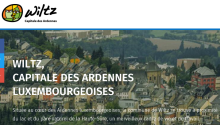
In October 2015 the Luxembourg government named the municipality of Wiltz a Circular Economy Hotspot. In February 2018 Wiltz renewed its political commitment with a Circular Economy Charter signed by its municipal council, by which it undertook to mainstream the circular economy in its future project and activities.
The 2023-2029 political declaration keeps up this momentum.
SuperDrecksKëscht® promotes the creation of an environmentally friendly society that protects its energy and resources, as part of the Luxembourg waste management strategy.
Ecotrel collects and processes waste electrical and electronic equipment (WEEE) across Luxembourg. End-of-life devices are reused or recycled, thereby complying with businesses' CSR requirements and upholding circular economy principles.
The Climate Pact was initially set up by Luxembourg's Ministry of Sustainable Development and Infrastructure. The goal was to enable municipalities wishing to tackle climate change to request State support by signing an engagement charter.
The Climate Pact 2.0 is operated by the Ministry for the Environment, Climate and Biodiversity. It includes measures on greenhouse gas reduction, energy efficiency, renewable energy, air quality, the circular economy and climate change adaptation.