Circular Futures was initiated by the environmental umbrella organisation Umweltdachverband in 2016 and is a collaboration of several organisations advocating for the transition to a circular economy in politics and legislation.
The platform carries out activities geared to developing a holistic circular economy in Austria. These include workshops, background papers and information material. It focuses on the political and legal framework needed for the transition to a circular economy.
It promotes discussion between stakeholder groups active in the environment, economy and social affairs and brings them to the table with representatives from politics, science and administration in order to jointly develop future-oriented solutions for a more circular Austria.
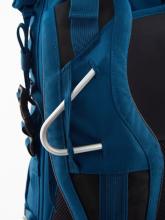
Klättermusen is a Swedish outdoor clothing company producing waterproof jackets, pants and backpacks made at least partly from recycled polyamide. The polyamide is created from post-industrial waste including packaging materials from factories, old carpets and discarded industrial fishing nets.
Räubersachen (robbers' loot in German) applies the concept of product-as-a-service to baby clothes. It provides parents with ecological woollen alternatives by refurbishing unneeded baby and toddler clothes and renting them out.
The Upper Austrian Cleantech-Cluster brings together suppliers, manufacturers, industrial researchers, mechanical engineers, recyclers and disposers in order to find joint solutions and develop new technologies.
Focus areas:
Material efficiency in production
Recycling
Recovery
Disposal
Circular design
Business models
Initial and continuing education
Research
SERVICES:
Cross-sector networking with researchers, companies, associations (regional, national, international)
Project development
Project management
Process support through conception, moderation of workshops, work meetings, events
The study analysed the economic effects of the transposition of Directive 1999/44/EC concerning warranty rights, which had to be transposed into national law by January 2002. A number of publications had suggested that strengthening warranty rights for consumer goods as foreseen in the directive could increase the price level of these goods, possibly resulting in a reduced purchases. The study addressed both questions by analysing data from several EU countries. The first question was addressed by analysing inflation rates of general prices and of prices for the consumer goods affected by the directive in the time period 1998 until 2002. The second question was analysed by looking at the share of consumers who used online consumer-to-consumer markets, which were not covered by the warranty rights foreseen in the directive.
The comparison of inflation rates for consumer goods showed that inflation rates for consumer goods were below the general inflation rate between 1998 and 2004. Therefore, between 1998 and 2004 prices for the different groups of consumer goods covered by the directive did not increase but actually appear to have decreased slightly. This effect has been found for all countries analysed with no significant differences between countries transposing the minimum standards and those that went beyond. The second part of the analysis addressed the question if a developed market for online consumer-to-consumer selling of goods exists, for which the new seller's warranties weren't valid. In case of price increases for business-to-consumer markets – which have not been found in the first part of the analysis – part of the transactions could be transferred to these markets. The analysis showed that the vast majority of consumers in Western European countries used the internet regularly to purchase goods, including the online-platform Ebay. In case of increasing prices for consumer goods because of strengthened warranty rights, part of the transactions would move to online consumer-to-consumer markets rather than resulting in an overall decline of consumer goods purchases. The general conclusion was that over the analysed time period no negative impact of strengthened warranty rights on the price level of consumer goods could be found.
Munich has taken its ambitious waste reduction strategy to the next level by developing an innovative reuse lab and shop concept. Its Halle 2 municipal secondhand store not only enables people to take responsibility for living more sustainably, it also provides opportunities for job creation, educational programmes and voluntary activities.
In operation since 2007, PET to PET Recycling Österreich GmbH produces food-grade recycled PET which is used for “bottle-to-bottle recycling”. Old PET bottles are turned into new ones in this resource-efficient recycling loop.
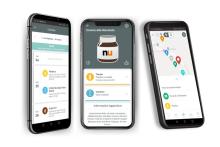
The Junker app recognises products with a single click on their barcode, and provides people with all the information they need to recycle their components correctly and quickly. It makes waste disposal easy!
Printer cartridges are seen as a single-use product by printer and cartridge Original Equipment Manufacturers. The DKWU Network is working to change that.
By providing life cycle assessment data and information on the End of Life scenarios, the DGNB Navigator facilitates the application of the life cycle assessment method and fosters the use of circular economy suitable construction products.