The EU Food Loss and Waste Prevention Hub is a one-stop-shop for stakeholders active in the area of food loss and waste prevention and reduction, across the EU and beyond. It's a source of information on what's going on in this community!
This collection of businesses in the Region of Murcia which are delivering on circular economy principles is an interactive tool. It is intended to be a source of inspiration and information: users can search for businesses active in specific sectors or focusing on specific circular economy principles.
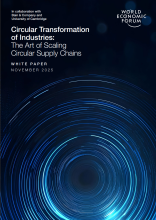
Businesses across industries increasingly recognise circularity as a strategic lever for resilience, competitiveness and growth. Sourcing rare earths and other critical minerals is also becoming a geopolitical challenge, making the case for circular supply chains.
The conversation has shifted from why circularity matters to how it can be implemented at scale. However, circular strategies are complex to operationalise, so companies require clear priorities, smart design and strong partnerships to overcome scaling challenges.
This white paper outlines methods for prioritisation, approaches to design circular supply chains and key enablers that are essential for scale. It offers leaders actionable strategies to unlock economic value and accelerate circular transformation.
On 27 November, the European Commission adopted a bold new Strategic Framework for a Competitive and Sustainable EU Bioeconomy Strategy. By using renewable biological resources from land and sea and providing alternatives to critical raw materials, the EU aims to move forward towards a more circular and decarbonised economy and decrease dependence on fossil imports.
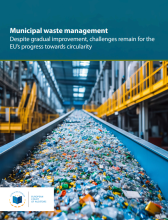
This audit aimed to evaluate the action taken by the European Commission and the Member States with a view to achieving the EU’s objectives for municipal waste.
It assessed whether the Commission’s legal initiatives and enforcement were fit for purpose; whether the four sampled Member States have made good progress in achieving EU waste targets and objectives; and whether the 16 sampled projects in these Member States – co-financed with EU funds – were implemented well in terms of time, cost and capacity.
The audit covered the period from 2014 to 2024. It found that while the Commission has boosted targets and requirements, many Member States face challenges in their progress towards circularity, mainly due to financial constraints and weaknesses in planning and implementation.
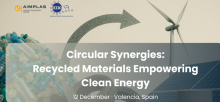
This workshop aims to connect the worlds of recycling and renewable energy, fostering synergies between materials circularity and technologies such as photovoltaic panels, wind turbine blades and batteries. Come and explore how recycled plastics and rubber can drive the clean energy transition!