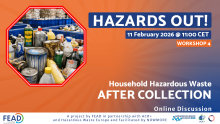
Hazards Out! aims to raise awareness about the mandatory separate collection of household hazardous waste and support local authorities and other relevant stakeholders with establishing effective management strategies for it.
This workshop will focus on the operational aspects of HHW management, exploring how hazardous household waste is safely transported, temporarily stored, treated, and, where possible, recovered.
AIMPLAS, the Plastics Technology Centre, has prepared an interesting article about contaminants in wastewaste. See how policymakers have updated the legislative framework for wastewater treatment, water reuse and the control of emerging contaminants.
This conference will tackle climate change and ways to prevent it, including innovative solutions that can be implemented under the Green Deal Strategies.
They're calling for abstracts: the deadline is 1 September!
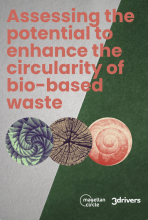
This study commissioned by the EEA assesses the potential to enhance the circularity of bio-based waste within the framework of the 2025 update of the EU Bioeconomy Strategy.
It focuses on identifying opportunities to move bio-based waste streams up the waste hierarchy, retain technical and economic value and minimise environmental impacts.
The study maps waste generation, collection, treatment and reporting practices across the EU and the technologies for managing biowaste.
It finds that better separate collection and development of high-value recovery pathways could reduce environmental pressures, greenhouse gas emissions and import dependence, though technological feasibility and scalability remain uncertain.
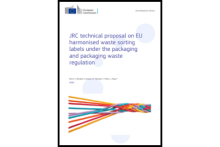
This report supports the implementation of the Packaging and Packaging Waste Regulation within the framework of the European Green Deal and the Circular Economy Action Plan 2.0.
Prepared by the Joint Research Centre for the Directorate-General for Environment, it draws on contributions from external contractors, over 25 000 EU citizens and more than 250 expert stakeholders. The study addresses the fragmentation of waste-sorting labels across Member States, a key barrier to efficient recycling and the functioning of the internal market.
The technical proposal sets out a harmonised system of waste-sorting labels for packaging and receptacles across the EU, geared to removing market barriers while ensuring that consumers receive clear, consistent and actionable sorting instructions.
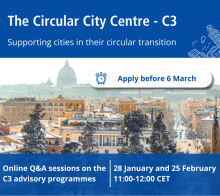
The Circular City Centre - C3 runs a Circular City Advisory programme and a Circular Project Advisory programme to support cities at various stages of their circular transition. They have just launched a new call for applications (deadline: 6 March). Online Q&A sessions will take place 28 January and 25 February.
Fibenol transforms forestry and wood industry residues into sustainable biomaterials used in the biomaterials and biofuels, packaging, construction, and food, feed and pharmaceuticals industries.