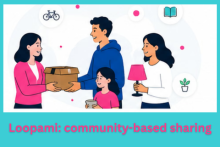
Loopami is a Milan-based platform which creates local communities of people interested in sharing and reusing items. It's still in the testing phase, but the initiative reduces consumption and waste while also forging closer ties between neighbours.
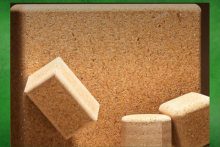
Rice Tab is a technical board developed from rice husks, an agricultural byproduct widely available in Europe.
Designed for applications in architecture, interior design and furniture, it transforms what was once considered waste into a high-performance material with a new functional life in the built environment.
Digital Product Passports are being rolled out and are key to keeping products and materials in circulation. However, they require interoperable, machine-readable data.
Verisav provides open RDF/OWL vocabularies for Digital Product Passports, as well as for returns and after-sales service and machine-readable warranties.
This project has developed an alternative tooling process based on recyclable thermoplastic materials and large-scale additive manufacturing combined with milling.
This innovative process has drastically reduced the materials needed and the waste generated.
Developing sustainable materials and utilizing recycled feedstock in material manufacturing requires a lot of laboratory testing to ensure that the new material meets functionality and safety standards. Measurlabs performs these tests!
Recycling flexible PET packaging is tricky because it is made up of layers but in Spain, recycled polyethylene terephthalate (rPET) is the only type authorised for post-consumer recycled content for food packaging.
The BOTTLE4FLEX project has taken up this challenge and aims to develop 100% recyclable flexible skinpack packaging using rPET.
The ECOFAP project aims to make shoe soles and heels from a material manufactured from tanned leather waste using 3D printing. This research project will help solve the problem of how to recycle leather scraps from the footwear manufacturing industry.
Purman Recycling and Processing Ltd. has developed the purman® method, a mechanical recycling process for rigid polyurethane (PU) and polyisocyanurate (PIR) foams.
The Horizon Europe project CHEERS is a new biorefinery concept. It takes underutilised or waste secondary streams (such as bagasse, wastewater, CO2 and CH4) from the brewery industry, processes them in biorefineries and converts them into innovative bio-based products.
It produces bioproducts for industrial applications: insect protein, disinfectant, microbial protein, ectoine and caproic acid.