While circular economy practices offer substantial environmental and economic benefits along with local job creation, their implementation requires significant adjustments in working conditions and practices.
This briefing dives into two of the circular building pathways identified as having high social impacts in the Circular Buildings Coalition’s 2024 Four Pathways Report: 1) Build with the Right Materials; and 2) Build Nothing.
These pathways are explored, along with their regulatory and market-level drivers, barriers and the measures needed to safeguard workers.
STICA Climate Action Week 2025 took place just last month - and the interviews with various stakeholders which were released during it are now available. From the impact of climate change on workers to circular textiles made from waste, you're sure to find some in line with your area of interest!
Characterisation techniques are essential in the plastics sector, as they ensure quality, reliability and safety, promote sustainability and minimise manufacturing risks. AIMPLAS will therefore host the second international seminar on plastics characterisation (CHARPLAST), bringing together international experts to address the main challenges and advances in this field.
International E-Waste Day on 14 October will focus on Critical Raw Materials, the elements that are mined in only a handful of countries and are crucial to foster the green and digital transition.
Organisations, municipalities, schools, businesses and individuals are invited to get involved!
Mexico Circular Hotspot will take place on 5-6 November. It will focus on bringing together stakeholders from business, governments and knowledge institutions to advance the circular economy in Mexico and the Americas.
The Paris Call for the Reuse Economy aims to form a community working to make reuse the rule, rather than the exception. It calls on people who believe in the power of the reuse economy as a driver of resilience, value creation and economic sovereignty. Do you agree? Then sign it!
Taranto CirTech has launched the Call4Ideas. It invites startups, innovative projects, young companies and emerging organisations to apply to join an acceleration programme designed to transform high-impact ideas into tangible, sustainable and scalable solutions. Apply by 22 June!
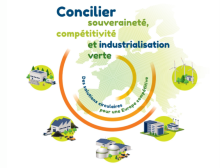
FNADE will ask a highly relevant question: how can we make circularity an asset for competitiveness?
The congress will endeavour to identify levers for developing local production of materials and energy from the waste sector in France and Europe. It will also look at ways to reconcile regulatory simplification with the protection of the environment and human health.
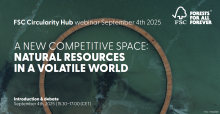
This webinar will explore how circularity is being embedded into wood-based industries.
Hear from leaders across the globe – including the Ellen MacArthur Foundation, Arauco, WWF, Greenpeace, CHEP and the FSC – as FSC’s Circularity Hub asks them how circular principles are being applied across sectors, and why they believe keeping natural resources in circulation and reducing reliance on virgin inputs is becoming a baseline for future-proof operations.