The academic paper "Analysing European Union circular economy policies: words versus actions" comprehensively reviews and analyses the EU’s circular economy (CE) policies. Results show a dichotomy between words and actions, with a discourse that is rather holistic, while policies focus on “end of pipe solutions”.
To address these limitations, the paper proposes a set of 32 science-based policy recommendations which can help strengthen circular economy policies both within and outside the EU. This research thus brings key insights for practitioners and academics seeking to better understand the EU’s CE policies and how to improve circular economy implementation at both national and international level.
See here for more results, insights and recommendations.
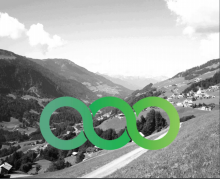
The Großes Walsertal region has developed a Circular Economy Strategy: it has set itself the objective of introducing circularity at every stage of the value chain, from production to consumption, repair and waste management. Smart product design and increased recycling and reuse activities will contribute to gradually close the loop of each product life-cycle in the region.
The Großes Walsertal communities act as role models by sharing tools, offering vouchers for local food stores (as part of the leisure activities funding) and implementing binding green criteria for events organised on their territory.
In order to create a new commercial use for raw wool, the Italian association Post Industriale Ruralità has developed a form of vertical hydroponic cultivation using wool instead of soil.
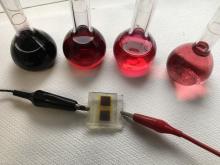
Giving value to waste as a precious renewable resource: for the first time, agri-food waste can be exploited to create photovoltaic cells that produce sustainable electricity. From the residues derived from winemaking (normally disposed of without any other use), researchers can extract natural dyes that capture solar energy, transforming them into a regenerated green resource.
This report follows on from the publication Circular Czechia from July 2018, exploring the circular economy in the Czech Republic.
The report explains how innovation has developed in this field since 2018, and aims to be an inspiration for firms, organisations and authorities on how to implement circular principles. It sets out a wide selection of good practices from the Czech Republic, and includes the retail, wastewater treatment, transport, construction and furniture sectors.
How can design help the circular economy? Design is born from the need to find or adapt solutions to everyday problems.
Design is present throughout the value chain: production, location, distribution, transformation, transport, sales and user experience. Design can minimise the impact on the environment and simultaneously empower people in their habits and environmental preservation. This is done through shapes, materials, production processes, colours, legibility, concept and narratives that value what is systemic.
A design project starts by thinking about what you intend to achieve. A design collaboration (a dynamic of cause and effect) helps identify weaknesses and opportunities when it comes to adopting a circular design to each stage of the process.