Tedre Farm, located in Southern Estonia, grows raspberries and produces raspberry juice and other derivatives.
In 2017, in a collaboration with the Estonian University of Life Sciences, it started a project to study technologies for the extraction of oil from raspberry seeds, particularly known for its medicinal properties.
Thanks to innovation, forests will be key for sustainable urban development. The European BASAJAUN project will optimize the use of forest products to boost the economy in rural areas and obtain new materials and construction systems based on the circular economy of wood.
AIMPLAS will participate in the development of new profiles manufactured from natural resins and reinforcement agents.
Castilla-La Mancha’s Circular Economy Strategy for 2030 is comprised of 21 main areas and 48 measures organised within six policy strands. There are four strategic sectors (industrial, agri-food, construction and tourism) and various objectives to be achieved by the region in order to implement circular models in the 17 focus areas.
This strategy is based on a circular economy analysis of the region, and relies on the collaboration and involvement of all stakeholders. It will be developed and implemented by means of two action plans, covering the 2021-2025 and 2026-2030 periods.
Alchemia-nova, the Institute for innovative phytochemistry and closed loop processes, has colloborated with vertECO, GRETA and LooPi to develop three types of green walls, which treat wastewater to service water standards and create plant biomass and fertiliser.
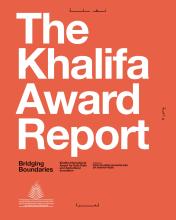
Date palms are becoming ever more important globally and in the MENA region (Middle East and North Africa). The Khalifa Award Report, inspired by 46 contributors in 21 countries, focuses on the 5 Ps -People, Planet, Prosperity, Peace and Partnerships - which shape the United Nations 2030 Agenda for Sustainable Development.
The bio-circular economic potential of the date palm industry has yet to be explored. In some cases, it is a necessity that can save lives in oases prone to fire hazards caused by climate change; it can also provide new green jobs in the sustainable economy transition. The European circular economy transition can serve as a model for adaptation in the MENA region.
More info on date palm recycling on pages 162-3 of the report.
Legno Urbano is an innovative project developed in Italy to promote wood recovery from trees which are felled in urban areas because of their age, their instability or spatial planning needs.