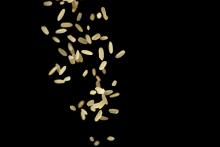
The RiceRes research project, launched in 2016 by the CNR (National Research Council) and the Universities of Milan and Pavia and financed by the Cariplo Foundation, aimed to make the most of waste materials from processing Italian rice.
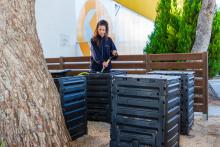
Peecycle aims to reduce the production and import of fertilisers from all over the world while making more efficient use of an inexhaustible source of minerals which is currently viewed as waste: urine!
Each of the companies in the Envien Group produces a biofuel component, with waste used for specific purposes, such as manufacturing pelleted animal feed or as a co-substrate for biogas production.
Italian startup Vaia has developed a passive loudspeaker for smartphones by using - as raw material - exclusively wood brought down by storm Vaia that badly hit the Dolomite mountains in Northern Italy in 2018.
“Staramaki” is a straw made of wheat. It is produced by a social cooperative KoinSep in Kilkis, northern Greece. The most widely produced local product wheat is used to create a viable eco-friendly alternative to single use plastic straws. At the same time they create employment opportunities and promote social cohesion, as well as local and regional development.
Commissioned by the Scientific and Technical Advisory Panel (STAP), which advises the Global Environment Facility (GEF), and co-authored by Circle Economy and Shifting Paradigms, this report uncovers the range of socio-economic and environmental co-benefits that circular mitigation interventions can bring to GEF countries of operation.
The report supports strategic advice by the STAP to the GEF and its implementing partners, and helps carve out a role for these bodies in accelerating the transition to a low-carbon circular economy. Its findings will be highly relevant to the development of future GEF projects and programmes across its different focal areas.
Spain manufactures 14% of all agricultural plastics in Europe. To optimize recovery of mulch films in the form of quality compost, AIMPLAS is developing the AGRO+ Project with funding from the Valencian Innovation Agency (AVI)
Refarmed uses the concept of ‘building integrated agriculture’. High-impact buildings (meaning they produce a lot of waste and excess heat) are equipped with rooftop greenhouses which turn all that waste into value - to support low-impact food production.
In the Douro Valley of Portugal, the research and development project Da Vide has created a range of products using grapevine residues – from paper to pens – avoiding the use of plastics and wood and using agricultural waste as a resource.