The Luxembourg Wood Cluster was set up in 2016 as a platform for discussion between all players in the wood value chain. One focus is establishing a closed loop for wood. It is managed by Luxinnovation, Luxembourg’s national innovation agency.
The Cluster is intended to be a place to get expert support and connect with key players in the wood processing domain, in order to become more sustainable and competitive through innovation.
It connects users with potential partners in the business and innovation ecosystem. The Cluster regularly organises information and networking events and thematic and technical workshops, and facilitates knowledge transfer and intersectoral R&D. It promotes pilot projects of interest to the wood processing industry and supports cooperation initiatives.
Ecotrel collects and processes waste electrical and electronic equipment (WEEE) across Luxembourg. End-of-life devices are reused or recycled, thereby complying with businesses' CSR requirements and upholding circular economy principles.
300 billion cigarette stubs are casually chucked away every year. Given that a single stub can pollute up to 500 litres of water, that is quite the environmental problem.
MéGO! offers a pragmatic solution with a service for collecting, sorting and recycling cigarette stubs.
The Upper Austrian Cleantech-Cluster brings together suppliers, manufacturers, industrial researchers, mechanical engineers, recyclers and disposers in order to find joint solutions and develop new technologies.
Focus areas:
Material efficiency in production
Recycling
Recovery
Disposal
Circular design
Business models
Initial and continuing education
Research
SERVICES:
Cross-sector networking with researchers, companies, associations (regional, national, international)
Project development
Project management
Process support through conception, moderation of workshops, work meetings, events
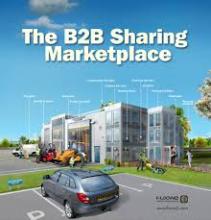
Sfridoo.com is an Italian B2B platform for purchasing and selling scrap materials. Using sharing economy principles to turn the circular economy into a reality, Sfridoo has already enabled more than 2500 businesses to recycle and reuse industrial scraps.
The circular economy is attracting significant interest worldwide, as evidenced by the numerous government strategies, business commitments and partnerships devoted to its development. At the EU level, the Action Plan for the Circular Economy and several other policy documents have demonstrated a strong commitment to move towards a low-carbon and circular economy. While the calls for a new economic model grow louder, it is clear that the transformation of markets and industries on a large scale will not be an easy achievement. It will require well-designed and ambitious policies to foster the transition as well as new business models. Against this background, CEPS brought together executives from major multinational companies as well as representatives of business associations and others.