Bio4HUMAN is a Horizon Europe-funded initiative working to solve solid waste management challenges in humanitarian settings.
This September, it will be holding a webinar on empowering the bio-based sector for solid waste management in humanitarian settings. The webinar will focus on the findings of their Humanitarian Needs Assessment Report and familiarise bio-based stakeholders with humanitarian settings and the challenges facing them in terms of solid waste management.
SISTERS is an EU H2020-funded project that aims to design, implement and promote innovations to address bottlenecks at each stage of the food value chain. The end goal is a systemic reduction in food loss & waste.
The Mediterranean is facing rising challenges related to environmental degradation, biodiversity loss, pollution, overpopulation and water scarcity. These issues are exacerbated by heatwaves, droughts and coastal vulnerabilities. This means that there is a critical need for an immediate transition to a green, circular economy in the Euro-Mediterranean region.
This report looks at the state of play there, the challenges to be faced and the role of stakeholders. It is intended to help policymakers align decisions and strategies for sustainable economic development and to provide up-to-date information for funding agencies, businesses, researchers, academics and civil society organisations advocating for green and fair policies in the Mediterranean region.
The SYMBA project (Securing Local Supply Chains via the Development of New Methods to Assess the Circularity and Symbiosis of the Bio-based Industrial Ecosystem) will help deliver bio-based solutions with reduced environmental impacts on soil, water and air quality.
The project aims to achieve this by creating an innovative method of industrial symbiosis which can be replicated across the EU, geared to the local/regional bio-based industrial ecosystem. This method will be used to help design zero-waste value chains.
The Dutch company Corbion grows microalgae in closed fermentation tanks where they transform sustainable sugars into algae in a few days. The algae are then used to produce omega-3 DHA (docosahexaenoic acid). These fatty acids provide essential nutrients for humans and many animal diets.
The European Economic and Social Committee will hold a public hearing in connection with its ongoing opinion on Aligning the circular economy and the bioeconomy at EU and national level. This opinion aims to enhance the synergies between bioeconomy, circularity and sustainability by promoting a more integrated and systemic approach to the circular bioeconomy.
The event will be webstreamed and interpreted into English, French and German. Participants will be able to interact.
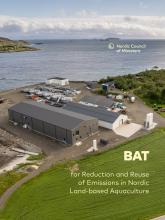
One advantage of land-based aquaculture is that emissions can theoretically be contained and reused. However, the techniques for doing so keep evolving. If the Nordic aquaculture industry is to grow in an environmentally sustainable manner, information is needed on the best available techniques.
The Nordic Council of Ministers therefore requested a report on the best available techniques for reducing and reusing emissions from land-based aquaculture. This report explores the state of play of Nordic aquaculture and takes stock of emerging and established techniques for reducing emissions and managing waste, with a focus on the circular economy. Improving waste management might improve the viability of land-based aquaculture, supporting the sustainable growth of this sector.
The CEE2ACT project aims to empower Central and Eastern European countries to develop circular bioeconomy strategies. It has National Bioeconomy Hubs established in 10 countries across the EU.
It'll be holding the second webinar in its Knowledge Transfer series on 27 June.
World environmental challenges such as climate change and biodiversity loss pose considerable risks to health and well-being. Linear resource extraction and processing account for half of total greenhouse gas emissions and more than 90% of biodiversity loss and water stress. Institutional and European stakeholders agree that transitioning to a circular economy could help solve these existential crises.
With the coming change in the European political landscape, the members of the Coordination Group of the European Circular Economy Stakeholder Platform want to flag up this issue to incoming legislators and advocate keeping the Green Deal and the circular economy as a primary focus for the next Commission and European Parliament.
Stakeholder engagement is crucial for organisations to understand, address and balance the interests and expectations of various stakeholders.
In this webinar, HOOP experts will present strategies to help cities and regions engage stakeholders in the urban bioeconomy, and tools to bring people into the decision-making process.