However, on behalf of the European chemical distribution sector, particularly the numerous SMEs it represents, Fecc would like to raise the following points:
increasing recycled content in products while ensuring their performance and safety is paramount
stakeholders from across the board – private companies, academia, and public bodies – can all benefit from circularity in the distribution sector
promoting circular public procurement to empower consumers and public buyers is necessary and must be supported post-COVID-19.
The Alliance for Flame Retardant Free Furniture welcomes the new Circular Economy Action Plan and calls on EU institutions to address the unnecessary use of chemicals preventing circularity and the achievement of climate goals, such as toxic flame retardants in furniture, which endanger people’s and firefighters’ health as they migrate out of products and can lead to increased fire toxicity.
The use of such retardants is a historical, hazardous and ineffective practice which is not proven to reduce the number of fires. It is at odds with circularity objectives and their presence in furniture runs counter to the ambition to introduce and increase circularity.
Ensuring fire safety is a must, but it needs to be done in ways that are not hazardous.
Expertise in technology, medicine and the social sciences
C123 is an EU-funded project aiming at transforming the largely available and unexploited methane resources into C3 hydrocarbons, particularly propylene.
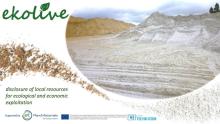
ekolive provides a new innovative eco-/biological method of zero-waste mining and processing of local primary and secondary raw materials, aimed at creating local resources of metals and minerals.
In the third year of the RepescaPlas project, chemical recycling will be used to turn marine litter into fuel for fishing boats. During the first two years of the RepescaPlas project, five tonnes of marine litter were recovered through mechanical recycling operations.
The overall objective of the project is the "smart" exploitation of Petroleum Refinery Sludges (PRS) produced by the Refinery of Motor Oil Hellas in Corinth (Greece).
The Italian Phosphorus Platform was set up to mirror the European Sustainable Phosphorus Platform. It aims to make Italy self-sufficient in terms of phosphorus and to ensure coordination with European policies.
The Platform is made up of stakeholders active in the phosphorus chain, with an emphasis on conservation and recovery. It includes research centres, public and private institutions, businesses and environmental associations.
Phosphorus is a critical raw material for Europe: hardly any products containing it are recycled and the EU is almost entirely dependent on imports from third countries. The Platform aims to close this loop.
The Platform has four working groups: Management and coordination, Technologies and good practices, Legislation, and Market.