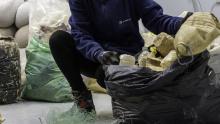
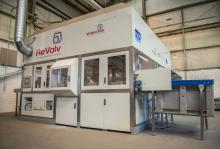
In the third year of the RepescaPlas project, chemical recycling will be used to turn marine litter into fuel for fishing boats. During the first two years of the RepescaPlas project, five tonnes of marine litter were recovered through mechanical recycling operations.
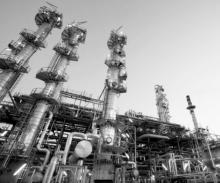
The overall objective of the project is the "smart" exploitation of Petroleum Refinery Sludges (PRS) produced by the Refinery of Motor Oil Hellas in Corinth (Greece).
The Italian Phosphorus Platform was set up to mirror the European Sustainable Phosphorus Platform. It aims to make Italy self-sufficient in terms of phosphorus and to ensure coordination with European policies.
The Platform is made up of stakeholders active in the phosphorus chain, with an emphasis on conservation and recovery. It includes research centres, public and private institutions, businesses and environmental associations.
Phosphorus is a critical raw material for Europe: hardly any products containing it are recycled and the EU is almost entirely dependent on imports from third countries. The Platform aims to close this loop.
The Platform has four working groups: Management and coordination, Technologies and good practices, Legislation, and Market.
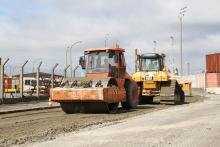
Contaminated sediment from the Port of Dunkirk has been re-used in road structures since 2002, when the Port started to cooperate with the Ecole des Mines de Douai and various industrial partners in order to design alternative materials for stabilised sub-base road layers.
The Finnish city of Lahti has been pioneering industrial symbiosis at the Kujala Waste Treatment Centre where all sorts of waste are reused. Several companies have established interconnected material flows, thus making one’s residues another one’s raw materials.
Wolkat is an family owned group of innovative, international textile recycling companies. It is offering a circular solution for textiles. Collected textile is transformed in-house to new products through sorting, recycling, spinning and weaving. All collected textile is transformed into a final product with hardly any water or any dye, leaving only 4-5 % waste from all textiles.
Votechnik has created a unique state-of-the-art recycling technology, the ALR 4000 machine, which safely removes hazardous waste materials from LCD flatscreen panels and monitors through a fully automated process.
plastship, successfully launched in May 2019, is a German digital startup that has created a trading and service platform for buyers and sellers of regrinds, re-granulates and recyclates.
DyeCoo has more than 20 years of experience in CO₂-based textile processing technology. It dyes fabrics using CO2 rather than water – and is the only company which does this at industrial scale.
Green Group Holding specialises in waste management in the broadest meaning of the term. Active across Europe, its headquarters are in Romania and its primary facilities are in Central East and South East Europe and the Baltic countries. It collects waste and recycles it into secondary raw materials.