Delivering a just and successful circular economy transition requires engaging a multitude of stakeholders at the nexus of several areas of expertise, including digitalisation, agriculture, business management, governance and policy, innovation and finance.
This autumn, on 18 and 19 October, UNECE, in collaboration with the Ministry of Environmental Protection of the Republic of Serbia, will organise the first in-person Regional Policy Dialogue under the Stakeholder Engagement Platform - Circular STEP.
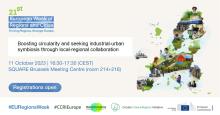
On 11 October 2023 in Brussels, the Circular Cities and Regions Initiative (CCRI) and the Hubs4Circularity (H4C) will host an onsite session during the European Week of Regions and Cities.
The session will focus on industrial symbiosis and circular value chains.
More information on the CCRI is available at the dedicated stand.
The new Horizon Europe Cluster 6 calls for proposals related to the circular economy will be open for submissions until 22 February 2024. EUR 120 million will be available in the form of grants to cover safe, integrated circular solutions at regional and sectoral levels for important material flows and product value chains.
The World Resources Forum ’23 will take place in Geneva and online on 4-6 September 2023, enabling stakeholders to explore some of the key topics around sustainable resource use from the perspective of sufficiency, value chains and digitalisation.
A virtual side session on Circular Economy in Asia, Africa and Europe: sharing knowledge that makes value chains circular will be hosted on 7 September. It will focus on leveraging expertise and experiences from Circular Economy Stakeholder Platforms in ASEAN, Africa and Europe.
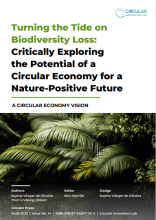
Global biodiversity is being lost at an unprecedented rate, giving rise to a sixth mass extinction and constituting one of the core challenges of the triple planetary crisis. Biodiversity forms the foundation of life on Earth and its loss presents a systemic risk to future human survival. To reverse the biodiversity crisis, transformative systems-wide change is required.
This paper addresses an existing research gap by exploring whether the circular economy can play a role not only in halting biodiversity loss but also in regenerating it and thereby contributing to a nature-positive future. To unlock the regenerative potential of the circular economy, a coherent strategy is needed that provides incentives for all actors, notably policymakers and businesses.
This Sitra memorandum focuses on providing building blocks to help the next European Commission address the ecological crisis while maintaining Europe's competitiveness and resilience.
The renewed European Commission will take office in 2024 and must keep up the European Green Deal, ensuring that it centres on nature and mainstreams the circular economy across the EU single market.
The key recommendations include:
ecosystem accounting
biodiversity offsets
circular single market
leveraging nature as a business opportunity
using data for the green transition
addressing Europe's global biodiversity footprint, and
reforming the common agricultural policy.
Stakeholders are encouraged to contribute to the ongoing debate, ensuring the strategy's success.
The Circular Economy Resource Information System (CE-RISE) is an EU-funded project aiming to optimise raw material reuse and recovery in electronic products.
CE-RISE seeks to create an information system and integrate digital product passports. It will provide stakeholders with a better understanding of the green credentials of electronic products.
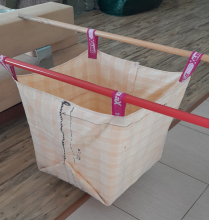
The Albanian social enterprise RecycAl reuses textile waste such as leather or canvas by turning it into heavy-duty bags that could be produced at industrial scale.
The Corporate Sustainability Reporting Directive (CSRD) will require EU business to report on several new sustainability topics, including their circular economy performance. However, only 2% of businesses currently comply with the disclosure requirements on resource use and the circular economy. Is your organisation ready?
Gravity Wave is a social start-up based in Spain. It focuses on working with small-scale fishermen to collect as much as possible of the plastic waste fouling the Mediterranean, from water bottles to a whole load of discarded fishing nets.