Frontiers in Artificial Intelligence is calling for research papers on the application of artificial intelligence, machine learning, computer vision, robotics, optimization and edge computing to circular economy challenges.
This white paper offersguidance to entrepreneurs on developing a circular business model.
It delivers a brief analysis of where you stand as an organisation when it comes to organising sustainably and circularly and formulating your ambition for the coming years, and an exploration of the business model that best suits your competencies and ambition.
The European Commission's Joint Research Centre has developed a set of methodological reports to support the implementation of the ESPR. Workshops will be held to gather feedback on each of them.
Interested? Then register for this project! It'll run from September 2026 to December 2027.
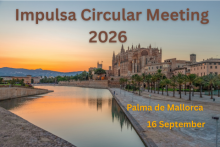
This meeting will mark an important milestone in the Balearic Islands' circular transition by launching reN · Balear Circular Hub, a collaborative platform designed to connect organisations, share knowledge and foster initiatives that create a positive impact across the archipelago.
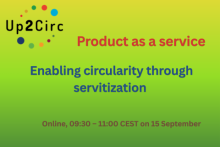
This webinar will explore how Product-as-a-Service business models can accelerate the transition toward a circular economy by shifting value creation from product sales to long-term service provision.
This position paper synthesises youth perspectives on the EU Circular Economy Act through a consultation survey of 57 responses across Europe, a youth check at the ECESP Annual Conference 2026 and additional qualitative stakeholder input.
There are two main parts: Youth Priorities: What the Act Still Needs identifies what young people consider is missing or insufficiently addressed in the current framing of the CEA. From Policy to Practice: What Effective Implementation Needs explains how these priorities could be addressed through the Act and its implementation.
The paper concludes that lower material demand, durable product design, reuse, effective collection systems and strong public governance play a key role: recycling is not enough.
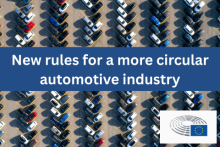
The European Parliament has approved rules covering the whole vehicle lifecycle, including binding recycled-plastic content targets, dismantling design requirements and producer-funded treatment of end-of-life vehicles across the EU.