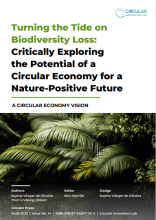
Global biodiversity is being lost at an unprecedented rate, giving rise to a sixth mass extinction and constituting one of the core challenges of the triple planetary crisis. Biodiversity forms the foundation of life on Earth and its loss presents a systemic risk to future human survival. To reverse the biodiversity crisis, transformative systems-wide change is required.
This paper addresses an existing research gap by exploring whether the circular economy can play a role not only in halting biodiversity loss but also in regenerating it and thereby contributing to a nature-positive future. To unlock the regenerative potential of the circular economy, a coherent strategy is needed that provides incentives for all actors, notably policymakers and businesses.
This online meeting on 18 September 2023 will discuss which further recycled nutrient products might be appropriate for certified Organic Farming, based on practical examples, and under what conditions they might be considered.
Questions considered: solubility and plant availability of nutrients, origin of raw materials, chemicals used in recovery process and life cycle assessment, contaminants and safety.
Examples will be: calcined phosphates, biochars, phosphate fertilisers from ashes, recovered ammonium sulphate, recovered nutrients from aquaculture and other marine wastes.
"Dialogues on the Circular Economy: Strategies for Transitioning from Food Waste Reduction to Zero Food Waste in the EU" will be held by Greenio on 4 September 2023 in Paris. The event will bring together top minds in sustainability, business and policy to explore and promote effective strategies for eliminating food waste in the European Union.
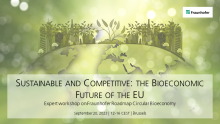
On 20 September, the Fraunhofer EU Office in Brussels will be holding a workshop to discuss its Roadmap for the Future Development of the Circular Bioeconomy. The workshop will explore the scientific and technological potential and challenges of the bioeconomy, how the bioeconomy can meet ecological and socioeconomic needs, and the policy framework needed to achieve this.
Participants will seek to identify solutions for the four application areas of bioeconomy: nutrition, biomass material utilisation, CO2 value creation and the socio-economic aspects of the bioeconomy.
The first episode of the Biocircularcities Trilogy unveils the story behind the success of the BBI-JU Biocircularcities project or how partners supported a transition of the pilot territories toward circular bioeconomy through a collaborative approach.
This webinar on 7 June aims to take stock of the current EU instruments which may be mobilised by insect producers in order to stimulate the EU bioeconomy, and thereby foster the creation of ‘innovative supply chains’ and ‘green jobs’ in European rural areas.
Furthermore, the event explores avenues for developing new EU measures to unleash the potential of the insect sector in stimulating the bioeconomy as well as in diversifying and boosting the domestic production of proteins in Europe.
The Ellen MacArthur Foundation is a UK charity which aims to speed up the transition to the circular economy. Since it was set up, the charity has emerged as a global thought leader, putting the circular economy on the agenda of decision makers across business, government and academia.
The Ellen MacArthur Foundation is a UK charity which aims to speed up the transition to the circular economy. Since it was set up, the charity has emerged as a global thought leader, putting the circular economy on the agenda of decision makers across business, government and academia.
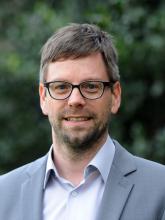
Carsten Wachholz joined the Foundation in 2020 after spending two years working for the European Investment Bank on Corporate Responsibility and another four years working for the European Environmental Bureau on the first EU Circular Economy Action Plan. Carsten leads the Foundation's newly established Brussels-based team supporting the development of circular economy policies at EU and international level (e.g. G20, OECD), in close collaboration with the Foundation's systemic initiatives on plastics, fashion and food.
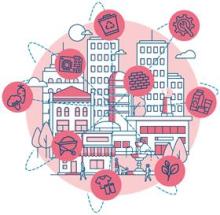
This online session on 2 June 2023, from 10:00 to 12:00 (GMT+2), explores how cities worldwide can unlock the potential of the circular economy at the local level, while promoting biodiversity and nature conservation.
This paper analyses CE policies and discourses in three European cities to draw critical insights and recommendations.
It first reviews the academic literature on urban CE policies to develop a new conceptual framework for analysing CE discourses and policies. This is then used to analyse and compare the CE policies of Glasgow, Amsterdam and Copenhagen.
Results show that technocentric approaches to the CE are dominant in the three cities. Moreover, they have very limited social justice policies for fair distribution of the costs and benefits of a CE transition. Key policy recommendations to address these shortcomings are thus proposed.
The insights offered by this paper are valuable for practitioners and academics seeking to improve urban CE policies.