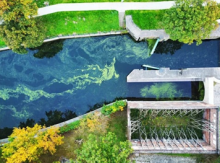
AIMPLAS, the Plastics Technology Centre, has prepared an interesting article about contaminants in wastewaste. See how policymakers have updated the legislative framework for wastewater treatment, water reuse and the control of emerging contaminants.
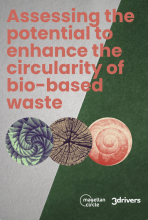
This study commissioned by the EEA assesses the potential to enhance the circularity of bio-based waste within the framework of the 2025 update of the EU Bioeconomy Strategy.
It focuses on identifying opportunities to move bio-based waste streams up the waste hierarchy, retain technical and economic value and minimise environmental impacts.
The study maps waste generation, collection, treatment and reporting practices across the EU and the technologies for managing biowaste.
It finds that better separate collection and development of high-value recovery pathways could reduce environmental pressures, greenhouse gas emissions and import dependence, though technological feasibility and scalability remain uncertain.
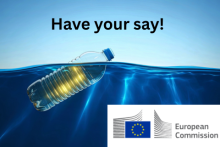
The 2019 Single-Use Plastics Directive addresses the problem of marine - principally plastic - litter. It will be evaluated next year, and the process is starting with a public consultation. Give your views by 17 March!
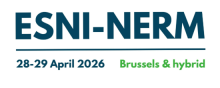
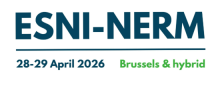
The ESNI-NERM (The European Sustainable Nutrient Initiative (ESNI) Conference and the Nutrients in Europe Research Meeting (NERM) conference will be an opportunity to present and discuss scientific evidence and technological innovations that can support the European Commission’s goals on nutrient management.
The ESNI-NERM conference will be an opportunity to present and discuss scientific evidence and technological innovations that can support the European Commission’s goals on nutrient management.
The conference will take place on 28-29 April and they are calling for abstracts. Deadline: 30 January!
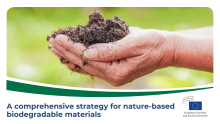
This public hearing is organised in connection with the opinion being prepared by the EESC on A comprehensive strategy for nature-based biodegradable materials to foster circularity and resource efficiency, strengthen the agri-food sector and scale-up the EU bioeconomy. The hearing will gather input for a comprehensive strategy for nature-based biodegradable materials.
Waste To Resources Latvia - boosting regional sustainability and circularity is a Lifeproject which provides a framework for coordinating, testing and scaling up circular economy solutions at national level, involving multiple partners and thematic implementation areas.
So far, it has launched national digital platforms for reuse and industrial symbiosis, improved data availability and decision-support tools for the waste management sector, and enhanced quality assurance of secondary materials through an accredited polymer testing laboratory.
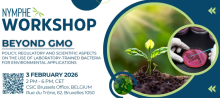
This workshop will look at how laboratory-trained bacteria can help restore polluted soils and waters, and how policy and regulatory frameworks can support circular outcomes while safeguarding public health and the environment.
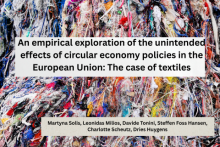
The EU strategy for sustainable and circular textiles calls for policy interventions to reduce waste and overconsumption in this sector. However, future policies may have unintended impacts.
This study examines the unintended effects of past and future textile policies, with the goal of evaluating scientific tools for improving ex ante impact assessments and so mitigating unintended effects in future.
It finds that the unintended impact of a policy can be just as important as the impact that it was designed to achieve. Stakeholder engagement, combined micro- and macro-economic modelling, extended consideration of the EU's resilience and the inclusion of a behavioural and social component are all key to reducing unintended impacts.