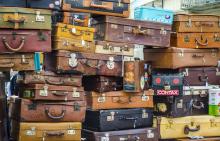
The City of Turin is financing some circular-economy oriented projects, among them the Balon Marketplace, an e-commerce portal for stakeholders who are active in the antiques, second-hand, vintage and reuse sectors, for a sustainable consumption of goods with a high cultural and heritage value. The portal aims to share ancient and past know-how and skills by promoting handycrafts shops.
Quid provides jobs for vulnerable people, especially women, in a field for which Italy is renowned: fashion. Quid markets its ethical and sustainable clothing under the label Quid Project. The project sources the raw material from the Italian fashion and textile world, using production surpluses and end-of-series fabrics. It therefore combines social and environmental impact.
The Treottouno Social Cooperative of Forlì (Italy) is committed to the implementation of circular economy systems where everything can be recycled, both goods/waste and people.
ISA - a sustainable enterprise of handicraftswomen - gives special attention to sustainability in its production chain, by employing production scraps and waste from diverse local companies, preferably choosing natural and ecofriendly products.
Post consumer High Density Polyethylene (HDPE) products are bought back, disassembled after cleaning and sanitation process, and then shredded by Jcoplastic. The secondary raw material obtained is analysed and characterised, then extruded for reusing in a new production cycle.
InnovaWood is a wood-oriented network of 70+ organisations in 28 countries in Europe and beyond, most active in research, education, training and knowledge transfer.
It includes research institutes, universities, VET actors and regional cluster organisations throughout the value chain, from forestry and wood processing to construction, furniture and the circular economy.
The network supports project consortia, many of them EU-funded. Circular projects include EcoReFibre(Ecological Solutions for Recovery of Secondary Raw Materials from Postconsumer Fibreboards), which recycles waste wood into fiberboards and novel fibre products, and Basajaun(Building A SustainAble Joint between rurAl and UrbaN areas Through Circular and Innovative Wood Construction Value Chains).
EU environmental rules aim to ensure that end-of-life vehicles are managed sustainably. They seek to eliminate hazardous substances in cars and require that most ELV parts and materials are reused or recycled.
The Commission would like to hear your views on its proposal to improve collection, treatment and recycling of ELVs. You can give your feedback on this initiative until 19 November 2020.