Circul’R was established in 2017 and is now a leading voice on the circular economy in France and internationally thanks to the close links it has established with all stakeholders: large companies, VSEs/SMEs, producer responsibility organisations (PROs), public institutions and local governments. Circul’R is firmly committed to supporting organisations - whether public or private - in their transition to circular models and modes of operation.
To achieve this mission, Circul’R works at three levels:
1. Training - Raising awareness of the circular economy among managers and employees and enhancing their skills in this area.
2. Leading coalitions - Creating and leading coalitions of committed players to set new standards in circularity.
3. Consulting - Support private and public organisations in setting up circular economy projects, from roadmap to operations.
Circul'R has a team of 40 circular economy experts.
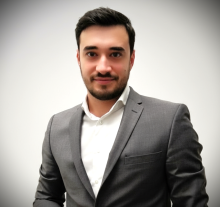
With over 10 years of experience in sustainability and the circular economy, Jean has worked across NGOs, public institutions and consulting. He started at the NGO GERES, supporting access to energy projects, then joined ReLondon to coordinate circular economy initiatives for the Municipality of London, including the “London’s Food Footprint” study. At Circul’R, he now leads projects with private companies and public authorities in France and internationally, supporting the design and implementation of circular strategies. He actively facilitates dialogue between sectors to overcome barriers to circularity, notably through coalitions and collaborative projects. As part of the ECESP Coordination Group, he aims to foster cross-sectoral cooperation and share field insights to advance Europe’s circular transition.