Revivack has set up the world's first system based on blockchain technology that facilitates the individual return of unwanted items to the manufacturer. These items can therefore be recovered in an orderly, transparent and reliable way, contributing to the promotion of the circular economy.
How many plastic bottles actually enter the recycling process?
Theory is one thing and reality tends to be another. The Czech Ministry of the Environment wanted to find out what really happens to plastic bottles after they are thrown into sorted bins for plastic waste. It commissioned Adastra to carry out a project using IoT technology to track the movement of sorted bottles.
Renewaball introduced the world’s first fully circular tennis and padel balls, designed with recycled materials sourced from used balls collected across European clubs.
This project embodies eco-friendly design by reusing rubber from old balls and using biodegradable wool felt to replace conventional polyester and nylon, which reduces microplastic pollution.
Purman Recycling and Processing Ltd. has developed the purman® method, a mechanical recycling process for rigid polyurethane (PU) and polyisocyanurate (PIR) foams.
With 14 automotive brands around the globe, Stellantis is a major industry player. In March 2022, it presented its Dare Forward 2030 strategic plan, aiming to achieve carbon net zero by 2038 while reducing its consumption of natural resources. The plan is steered by the Circular Economy Business Unit and is based on remanufacture, repair, reuse and recycle.
CuCilento (which can be understand to mean both "Sew slowly" and "Sew in Cilento", a region in Campania) is an innovative business project designed by Sarah Khoudja as part of the EU's 'Empowering Women in Agrifood' programme led by the Future Food Institute. It is an upcycling workshop which processes agricultural by-products and other materials (boat sails, factory scraps, etc.) classified as waste and turns them into net or fabric bags that can be used for food packaging or shopping.
Skanska is a leading construction and development company that has made sustainability a crucial part of its operations. With the assistance of Cyrkl, it has taken on the challenge of deconstructing the Merkuria building, revolutionising the industry, saving materials and helping charities in the process.
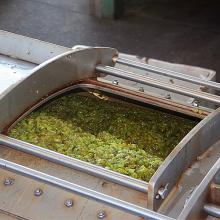
Arany Kapu (in English "golden gate"), a private company in Kunfehértó, Hungary, collects grape processing and winemaking byproducts from all the country's wine regions for valorisation in diverse forms, including distillation.