The Finnish city of Lahti has been pioneering industrial symbiosis at the Kujala Waste Treatment Centre where all sorts of waste are reused. Several companies have established interconnected material flows, thus making one’s residues another one’s raw materials.
Cycle Terre project aims to set up an industrial process to reuse soil extracted from the excavation sites of the new subway and other construction sites in Sevran, France.
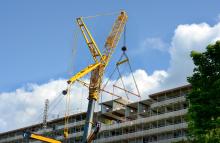
The Super Circular Estate project addresses the challenge of changing housing needs. The Parkstad Limburg region’s population, is estimated to shrink by 27% in the next 30 years, calling for a radical reorientation in housing facilities. The project aims at demolishing vacant outdated high-rise apartment buildings, and reuse their components to establish new social housing units.
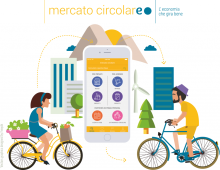
An app which enables users to buy circular goods and services near them or online and provides reliable information on what exactly the circular economy means.
In October 2015 the Luxembourg government named the municipality of Wiltz a Circular Economy Hotspot. In February 2018 Wiltz renewed its political commitment with a Circular Economy Charter signed by its municipal council, by which it undertook to mainstream the circular economy in its future project and activities.
The 2023-2029 political declaration keeps up this momentum.
The Climate Pact was initially set up by Luxembourg's Ministry of Sustainable Development and Infrastructure. The goal was to enable municipalities wishing to tackle climate change to request State support by signing an engagement charter.
The Climate Pact 2.0 is operated by the Ministry for the Environment, Climate and Biodiversity. It includes measures on greenhouse gas reduction, energy efficiency, renewable energy, air quality, the circular economy and climate change adaptation.