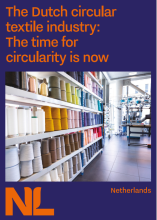
This publication featuring Holland Circular Hotspot shows the state of play and potential of circularity within the textile value chain in the Netherlands and beyond.
It aims to engage international dialogue on accelerating the transition to a fully circular textile economy, with policymakers, researchers, entrepreneurs, consumers and investors.
The challenges of achieving sustainability and circularity in textiles are complex and interconnected, from reducing environmental impact to improving labour conditions. This underscores the importance of international and multi-stakeholder collaboration to drive innovation, scale up sustainable practices and create a thriving circular textile industry.
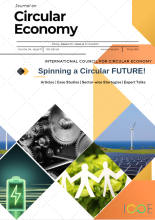
The Journal on Circular Economy is an initiative by the International Council for Circular Economy (ICCE). The journal explores various dimensions of the circular economy, including policy frameworks that support sustainable practices, research initiatives that drive innovation, and collaborative efforts that foster knowledge sharing among stakeholders.
The January 2025 edition features an article by Freek van Eijk from Holland Circular Hotspot, one of the ECESP Coordination Group co-chairs. The article focuses on the Netherlands: embracing circular economy as a business opportunity and a necessity. It looks at the origin and future of circular economy developments there and what lessons might be learned for India.
SUM 2025 aims to promote more continuous interaction and collaboration across fields, encouraging sustained, multidisciplinary dialogue and strategic partnerships.
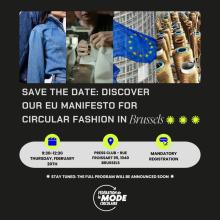
The Fédération de la Mode Circulaire (Circular Fashion Federation) is organising an event which will mark a milestone in their journey towards sustainable fashion: the release of their EU Manifesto for Circular Fashion. This manifesto outlines a policy roadmap for the European Union to leverage circular fashion as a means to bolster its textile industry, promote fair competition and champion environmental and human rights standards.
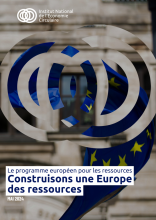
INEC, a leading think tank on issues related to the preservation of natural resources, has published its European Resource Programme.
It defines ways to preserve natural resources, focusing on six resources that will be crucial for energy, the economy and the environment: water, wood, li-ion batteries, permanent magnets, copper and building materials.
The Circular Economy package has merely resulted in measures targeting consumers rather than authorities. Positive initiatives such as the digital product passport aside, this vision of the circular economy is not sufficiently integrated into decarbonisation goals. INEC's realistic measures, the result of broad debate between stakeholders, aim to transform the economy and make it genuinely circular.
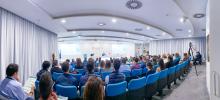
The 2025 Basque Circular Summit will be the largest event on the circular economy in southern Europe this year. It will analyse the challenges and opportunities posed by the circular economy for companies, society and the economy in the Basque Country and show what has already been achieved.
This publication contains the results of over 74 projects completed as part of the Circular Ecoinnovation Programme between 2017 and 2023. The programme, managed by Ihobe, the environmental management agency of the Basque Government’s Ministry for Economic Development, Sustainability and the Environment, drives ecodesign, circular economy demonstration and strategic ecoinnovation in Basque companies.
The market, commercial, economic, technical or environmental feasibility of each project has been graphically included in each datasheet.
See also the website listing all the Basque Country's circular solutions to date.
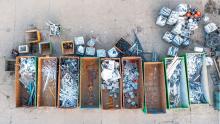
The network properties of the global waste trade were assessed using time series data of material and monetary flows between 2000 and 2022 from Chatham House's experimental database. The study focused on the distribution of monetary and material flows, policy recommendations and future research avenues useful for obtaining a more comprehensive understanding of socio-economic systems such as trade networks.
This work is a solid example of the application of network-based methods as an eco-mimicry approach for assessing the sustainability and fragility of socio-economic systems which can be helpful for researchers and policy makers interested in transitions towards regenerative circular economies.
Filippos K. Zisopoulos, Brian D. Fath, Susana Toboso-Chavero, Hao Huang, Daan Schraven, Benjamin Steuer, Alexandros Stefanakis, O.Grant Clark, Serban Scrieciu, Simron Singh, Dominik Noll, Martin de Jong
This study assesses the network properties of the global trade in waste metals and the distribution of material and monetary flows across trading countries using a bio-inspired approach.
Due to homogenization, high network redundancy and low network efficiency, the trade remained robust yet outside the "window of vitality" characterising natural ecosystems. A few, mostly high-income countries dominated the market, consolidating imports of high-value metal waste, mostly from low- and middle-income exporters.
Policies should address circularity and trade inequities, accounting for environmental and social ramifications throughout the lifecycle of products and materials.
AIMPLAS, the Plastics Technology Centre, is hosting the second International Seminar on Biotechnology Applied to the Plastics Sector.
This event will bring together over 20 international experts in biotechnology and sustainability to explore innovative solutions that will enable the plastics sector to move towards a more sustainable future.