DiCE (Digital Health in the Circular Economy) has been created to bring key stakeholders together to address challenges associated with the growing use of digital healthcare products and increasing demand for raw materials to manufacture new electronic devices and other equipment.
This Sitra memorandum focuses on providing building blocks to help the next European Commission address the ecological crisis while maintaining Europe's competitiveness and resilience.
The renewed European Commission will take office in 2024 and must keep up the European Green Deal, ensuring that it centres on nature and mainstreams the circular economy across the EU single market.
The key recommendations include:
ecosystem accounting
biodiversity offsets
circular single market
leveraging nature as a business opportunity
using data for the green transition
addressing Europe's global biodiversity footprint, and
reforming the common agricultural policy.
Stakeholders are encouraged to contribute to the ongoing debate, ensuring the strategy's success.
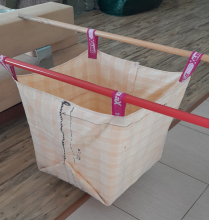
The Albanian social enterprise RecycAl reuses textile waste such as leather or canvas by turning it into heavy-duty bags that could be produced at industrial scale.
This Brussels based event on 21 November 2023 will bring together industry leaders, policymakers, and innovators to explore the path towards a more sustainable and circular textile sector.
This online meeting on 18 September 2023 will discuss which further recycled nutrient products might be appropriate for certified Organic Farming, based on practical examples, and under what conditions they might be considered.
Questions considered: solubility and plant availability of nutrients, origin of raw materials, chemicals used in recovery process and life cycle assessment, contaminants and safety.
Examples will be: calcined phosphates, biochars, phosphate fertilisers from ashes, recovered ammonium sulphate, recovered nutrients from aquaculture and other marine wastes.
Gravity Wave is a social start-up based in Spain. It focuses on working with small-scale fishermen to collect as much as possible of the plastic waste fouling the Mediterranean, from water bottles to a whole load of discarded fishing nets.
Knof is a Slovenian social enterprise with a focus on circularity and sustainability. It operates reuse boutiques, a circular laboratory and a programme for individuals and entrepreneurs supporting sustainable companies.
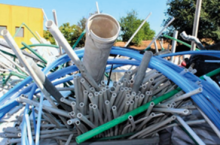
The "Waste REcycling Project" (WREP) is a pilot scheme developed by PVC Forum Italia, the national association of producers, converters and recyclers of PVC (polyvinyl chloride), in collaboration with VinylPlus, the European PVC value chain association.
It aims to make the collection, sorting and recycling of PVC waste from demolition/renovation, bulky waste and waste management centres more efficient, using a consolidated and accredited traceability methodology.
Wood is becoming increasingly important: it is key to energy, construction and decarbonisation, as well as raw material security. In addition, a raft of legislative and non-legislative measures are being prepared by the Czech Republic and the EU on the issue of wood processing and forestry.
Analysising the sector is therefore paramount. After eight months of work, the research team (Think Tank) of the Institute of Circular Economy has published a study on Closing the Loop on Wood: Circular Bioeconomy Opportunities in the Value Chain for Forest Products and Wood in Czechia. It explores the material flow of wood in the Czech Republic and the challenges, weaknesses and opportunities for cross-sectoral use.
The ELLIPSE project seeks to optimise the use of two heterogeneous waste streams of which plentiful amounts are generated across Europe: slaughterhouse waste (bellygrass) and paper and pulp sludge. The project will produce cost-efficient polyhydroxyalkanoates (PHAs) for the agricultural and packaging sectors by co-processing these waste streams with other organic ones such as glycerol from the biodiesel industry and sludge from the dairy industry.