"Chambers for a Circular Economy - Actions to Support SMEs' Transition to a Circular Economy" aims to offer a clear overview of the wide range of initiatives led or co-managed by Eurochambers in the field of the Circular Economy, with the intention not only to inform and share innovative actions, but also to spur and motivate synergies, triggering collaborations and the creation of new business models. The aim of each and every of these projects is to enable businesses to evolve from a linear to a circular mode of production and consumption.
This publication presents a total of 32 projects initiated or co-led by Chambers in 13 countries, and categorized under 5 main topics:
In the development of the circular economy, discussion around circular business models and circular revenue models is booming.
But what is a true circular business or circular revenue model? When can these models be applied, and what are the barriers that still exist?
For the past decade the authors of this paper have gathered practical experience with the implementation of circular revenue models such as lease, pay-per-use and take-back schemes. It is from this experience that they noticed that the current institutional economic framework hinders the transition to the circular economy.
The paper provides insight in four key barriers, providing a real-life business case as an example for each. It also includes a guideline for policy makers on how to address these barriers.
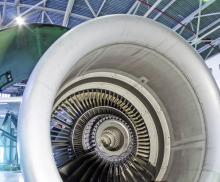
This report assesses the Aviation sector value chain in the context of Circular Economy principles.
It offers an overview of the aircraft lifecycle, new supplier-consumer programmes already initiated by the industry and a proposal for the reconversion towards a more circular business model.
The assessment of the value chain was carried out according to the Circular Economy perspective (Redesign, Reduce, Reuse, and Recycle).
This report advises the companies involvled in the EACP-EUROSME project, as an instrument to start the implementation process towards a Circular Economy business and as research for further financial support for project funding.
Samen werken aan circulaire fietsinfrastructuur. Een integrale en systematische aanpak by Stichting Circulair Bouwen is a report on a 2-year programme carried out with EU funds on building a circular bicycle road infrastructure. Over this period of time, valuable information has been gathered on how to promote and organize circular building efficiently.
To follow up on the programme, a multi-year project will be carried out in cooperation with governments, companies, educational institutions and NGOs, under the lead of the Radboud University Nijmegen, which will include two important policy fields:
encouraging cycling (low carbon, public health, better access to congested cities, car traffic reduction) and
The Polish Chamber of Digital Economy, an Ecommerce Europe member, has published a report on sustainability in e-commerce.
This report, titled Green Generation, shows that Polish consumers generally spot environmentally-unfriendly behaviours of retailers, but they do not quite want to take responsibility for making e-commerce less harmful to the environment; only one in five consumers is willing to wait longer for a shipment to be delivered through a grouped consignment.
As they already engage in some environmentally-friendly practices, such as collecting parcels from dedicated points, they do not seem willing to take up financial responsibility, such as paying extra charges for more ecological packaging or deliveries.
Construction and demolition waste (C&DW) makes up just over one third of total waste generation in the EU. Despite relatively high recovery rates of used materials, Europe’s construction sector will need to be even more ambitious in its waste management practices if it is to fully embrace Europe’s circular economy.
According to this European Environment Agency (EEA) briefing, circular approaches are key to increasing the quality and quantity of recycling and reuse of construction and demolition materials. The document examines how circular economy-inspired actions can help achieve waste policy objectives, namely waste prevention and increase both the quantity and the quality of recycling for C&DW while reducing hazardous materials in the waste.
This report from the European Environment Agency reviews waste prevention policies in Europe with a focus on how these policies approach the issue of plastics and plastic waste.
Waste prevention is at the centre of EU waste legislation as it delivers the most effective results in dealing with environmental issues around waste, placing it at the top of EU and national waste strategies and legislation.
Waste prevention can be implemented in any waste stream, but it needs to be customised to reflect each stream's particularities. This report focuses on plastic waste, as there is potential for substantial mitigation of the environmental issues raised by increased plastic consumption through the use of waste prevention instruments and mechanisms.
Berlin has the potential to become the first Circular City in Germany, due to its growing variety of initiatives, grass-roots and research work in the area of circular economy (CE).
This report provides information on the development of the project Circular Berlin, which started in 2018 and is financed by the EIT, under Horizon 2020.
The project consists of 4 phases:
Pre-assessment (conducting awareness meeting with CE professionals, identifying CE initiatives, finding partners etc.) - already completed
The publication aims at informing on importance of the transition to the circular economy, its economic, environmental and social impacts and benefits, international starting points, and situation in Slovakia. At the same time through presenting positive examples of performed activities and projects it has the ambition to become a means for making experience accessible and exchange experience as well as its presentation, also in relation to the international level.
This report provides a cross-country review of waste, materials management and circular economy policies in selected OECD countries, drawing on OECD’s Environmental Performance Reviews for 11 countries during the period 2010-17. It presents the main achievements in the countries reviewed, along with common trends and policy challenges, and provides insights into the effectiveness and efficiency of waste, materials management and circular economy policy frameworks.
As the selected reviews were published over a seven-year period, information for some countries may be more recent than for others. Nevertheless, the policy recommendations emerging from the reviews may provide useful lessons for other OECD countries and partner economies.