In operation since 2007, PET to PET Recycling Österreich GmbH produces food-grade recycled PET which is used for “bottle-to-bottle recycling”. Old PET bottles are turned into new ones in this resource-efficient recycling loop.
The German Sustainable Building Council (DGNB) is a central knowledge platform for sustainable building. It provides the world’s most advanced sustainable building certification system which makes circular economy aspects measurable and assessable.
PSLoop Project is an innovative purification process for recycling expanded polystyrene foam demolition waste containing HBCD.
This innovative project employs a ground-breaking technology for dissolving expanded polystyrene foam waste and extracting and recovering bromine from the restricted flame retardant chemical, HBCD. The bromine can then be used again to make new flame retardants.
The BAMB project was an innovation action within the EU-funded Horizon 2020 programme.
BAMB promoted a systemic shift where dynamically and flexibly designed buildings could be incorporated into a circular economy. Through design and circular value chains, materials in buildings keep their value – in a sector producing less waste and using less virgin resources.
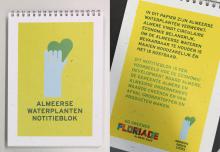
The city of Almere, working together with local stakeholders and the company Millvision, has developed an innovative circular economy partnership.
The aquatic plant which grows in the lake is a local and renewable input for paper production. It is also circular since something that would otherwise be discarded as waste is used as a raw material.
The CircularLab is an innovation centre, focusing on developing innovative solutions to waste management. Based in La Rioja, it works with universities, technological centres, businesses and public authorities around the world to drive innovation in the circular economy and recycling.
The ECONYL® Regeneration System turns fishing nets, fabric scraps, carpet flooring and industrial plastic into an infinitely recyclable nylon raw material.