This report demonstrates the value of a circular economy that is regenerative by design.
The health of our economy relies on the health of nature, but nature has been overexploited and undervalued – and is declining at an unprecedented rate. That needs to change.
This study focuses on Europe’s built environment and explores how a nature-positive circular economy in the sector can unlock a huge economic opportunity for the continent, increasing resilience, competitiveness and the vibrancy of its cities.
Six circular economy strategies have been selected based on their potential to drive economic and nature-positive gains and realise wider environmental and social outcomes.
On 14 June, as part of the activities of the Belgian Presidency of the Council of the European Union, the Public Waste Agency of Flanders (OVAM) held a workshop on the future of the EU Waste Framework Directive.
The main findings of the workshop are set out in the event report, including key recommendations for the European Commission.
This report aims to shed light on the carbon footprint of the retail and wholesale sector in Europe and its value chains around the world. Besides providing insight into the status quo, it aims to set out a path towards a more sustainable future across four retail and wholesale subsectors:
food and beverage and health and beauty
textile and apparel
consumer electronics, and
home and do-it-yourself.
The study points out that there are four decarbonisation levers for retailers and wholesalers, including improved product circularity and improved packaging circularity.
The publisher hopes that this study will provide policymakers with actionable insights.
Circular Week is an international series of events and initiatives dedicated to the circular economy and sustainable development, taking place across Europe. This year, the event will take place on 21-25 October.
Any company, individual, institution, association or other entity which would like to be a co-organiser and partner of Circular Week can host their own event from 21-25 October. Events can take the form of conferences, educational workshops, seminars, webinars and more, in any format and in any location. Do you have an idea for an event? Submit it!
CircularInvest provides tailor-made support to improve projects' circularity, develop a business plan (including IP and legal aspects), and make circular economy projects more appealing to investors.
Apply now to get free project development assistance to increase your project’s investment readiness!
The SYMBA project (Securing Local Supply Chains via the Development of New Methods to Assess the Circularity and Symbiosis of the Bio-based Industrial Ecosystem) will help deliver bio-based solutions with reduced environmental impacts on soil, water and air quality.
The project aims to achieve this by creating an innovative method of industrial symbiosis which can be replicated across the EU, geared to the local/regional bio-based industrial ecosystem. This method will be used to help design zero-waste value chains.
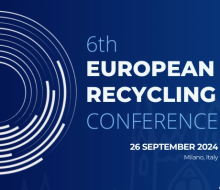
The 6th European Recycling Conference, organised by EuRIC in partnership with Assofermet, will take place on 26 September in Milan, under the heading 'Recycling Today, Resourcing Tomorrow'. This event will also celebrate EuRIC's 10th anniversary: a decade of commitment to circularity and sustainable recycling practices.
How does digitalisation contribute to advancing circular procurement practices?
The ECESP Leadership Group on Circular Procurement organised the #EUCircularTalks webinar on 27 September at 10:00 – 12:00 CEST, offering valuable insights into global trends, practical tools, and real-world case studies. Participants had a chance to learn strategies to mitigate environmental and social impacts associated with ICT procurement and to implement sustainable procurement practices effectively.
ICLEI - Local Governments for Sustainability is a global network of more than 1 750 local and regional governments committed to sustainable urban development. Active in over 100 countries, ICLEI influences sustainability policy and drives local action for low emission, nature-based, equitable, resilient and circular development.
Simon Clement joined ICLEI Europe in 2002. As Head of Circular Economy, he is responsible for ICLEI's activities in this field, including managing the European Circular Cities Declaration. For over 20 years he has worked for, and on behalf of, local, regional and national governments in project, policy and strategy development on sustainability issues such as circular economy, procurement, transport and smart cities.