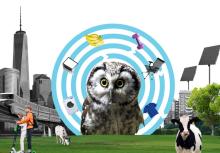
Fab City Challenge is an initiative launched in 2014 by the then mayor of Barcelona, challenging cities to become self-sustainable by 2054. The project has now expanded into a sustainable cities network working on the digital transition, localisation and regenerative economy. One focus is combating food waste and using fresh produce which would otherwise have been thrown out.
Members have access to knowledge exchange, network events, research opportunities and engagement with like-minded cities around the world. They meet once a year at the Fab City Summit, where new cities also join the Network.
Distributed Innovation Workshops are also organised, where participants learn about various areas of innovation and sustainability.
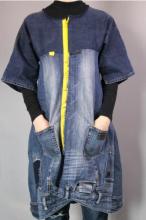
Better World Fashion produces new quality products from waste materials. Their primary material, leather, is from discarded post-consumer products collected by NGOs.
AIMPLAS, the Plastics Technology Centre, is collaborating with the Microbiology and Ecology Department of the Universitat de València on the DURPROMAT project, led by the industrial company DURPLASTICS. They are working to develop a new type of plastic that is more resistant to impact, UV radiation and the action of marine organisms.
Sitra works with partners from different sectors to research, trial and implement bold new ideas that shape the future. It aims to make Finland a pioneer in sustainable well-being.
It is a future-oriented fund which creates preconditions for reform, spurring everyone towards making a change and providing opportunities for co-operation.
Sitra’s work focuses on supporting a fair transition to a circular economy and investigating how business can be based on sharing instead of ownership. Sitra is also working to advance circular trade policies, to increase the understanding of environmental effects of digitisation and to explore the potential of the circular economy to safeguard biodiversity.
At 12.00 CET today, watch the launch of the Global Alliance on Circular Economy and Resource Efficiency (GACERE). The alliance brings together governments and relevant networks and organisations to provide a global impetus for initiatives related to the circular economy transition, resource efficiency and sustainable consumption and production, building on efforts being deployed internationally.
In a call for projects the PREVENT Waste Alliance was searching for innovative and sustainable solutions contributing to a circular economy in low- and middle-income countries. The eight selected pilot projects will now be implemented in 15 countries worldwide.
The third Global Bioeconomy Summit (GBS) organised by the International Advisory Council on Global Bioeconomy (IACGB) was held in an interactive and virtual format in November 2020. The conference report and other highlights from the event are now available.
Date palms are becoming ever more important globally and in the MENA region (Middle East and North Africa). The Khalifa Award Report, inspired by 46 contributors in 21 countries, focuses on the 5 Ps -People, Planet, Prosperity, Peace and Partnerships - which shape the United Nations 2030 Agenda for Sustainable Development.
The bio-circular economic potential of the date palm industry has yet to be explored. In some cases, it is a necessity that can save lives in oases prone to fire hazards caused by climate change; it can also provide new green jobs in the sustainable economy transition. The European circular economy transition can serve as a model for adaptation in the MENA region.
More info on date palm recycling on pages 162-3 of the report.
The Collaborating Centre on Sustainable Consumption and Production (CSCP) is an international, non-profit think-and-do tank that works with businesses, policy makers, partner organisations and civil society to deliver a good life for all. They are experts in sustainable solutions and aim to mainstream sustainability.
CSCP is active in fields such as social innovation, sustainable product portfolio and footprint assessments. It provides policy advisory services rooted in scientific research and hands-on experience, and develops focused research and evaluation through real-time prototype testing in a holistic living lab format. It also conducts training and capacity building.