Textiles and clothing play an important role in our everyday life. But the global fashion industry model is unsustainable. It uses large amounts of resources and has negative impacts on the environment and people. The global fashion industry, therefore, has to make a transition towards a circular model. In a ‘circular’ fashion economy, clothes, textiles, and fibres are kept at their highest value during use and re-enter the economy to avoid becoming waste.
This research note produced by Ecopreneur.eu is a first inventory of the potential impacts of future EU circular fashion on non-European textile producing countries. It uses existing literature and input from four circular economy experts to analyse the economic, social and environmental impacts.
In March 2019, the Ellen MacArthur Foundation launched Circular Economy in Cities, a suite of easily accessible resources which provide a global reference on the topic.
The Finnish Innovation Fund Sitra is collecting a selection of circular economy solutions that are among the most viable, promising, scalable and impactful in the world.
This publication by WBCSD and Circle Economy highlights how the built environment, consuming almost half of the world's resources extracted every year and responsible for a massive environmental footprint, is a fundamental sector in the circular transition.
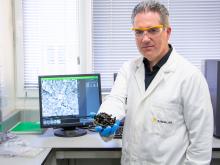
GRAMOFON, a European project coordinated by the Spanish Plastics Technology Centre AIMPLAS, has ended after 42 months, with very promising results on CO2 capture. New materials for capturing CO2 could be used to reduce industrial emissions and as catalysts.
SCALER provides mechanisms to accelerate the journey towards efficient and quick implementation of industrial symbiosis in the European process industry. They do this by developing action plans and adapted solutions to industrial stakeholders and communities.
SCALER works closely with a wide range of stakeholders including industrial networks, consultancies, researchers and policy makers at various geographic and political levels, to deliver practical tools and guidelines for industry actors engaging in resource efficiency, reuse and sharing.
To achieve this goal, SCALER is developing a set of reports and guides. They offer insights into how businesses can start industrial resource synergies with other companies to minimise their waste and create more value from their production.
All citizens and the wider community of stakeholders are welcome to express their views in a consultation on Waste shipments – revision of EU rules before 30 July 2020 (midnight CEST).
The major circular economy event, the World Circular Economy Forum, will be postponed until 2021 as a result of the COVID-19 pandemic. A virtual WCEFonline event in September 2020 will address how the circular economy can help reboot the economy. (Image: Topias Dean, Sitra)
ACI’s Future of Polyolefins Summit, on 20 and 21 January 2021 in Antwerp, will provide the perfect opportunity to meet with leading executives and experts from across the entire value chain.